Robin Hood Spotlight

Robin Hood
2006-2009 TV Series
Additional Features

Spotlight Review by Allen W. Wright
(Original Version: October 2007)

Robin Hood Series One DVD art

Introduction

Created by Dominic Minghella and Foz Allan
Starring Jonas Armstrong, Lucy Griffiths, Richard Armitage and Keith Allen
(Tiger Aspect for BBC One)

Airdates: October 7, 2006 - June 27, 2009

To supplement my original review of the show's first season, I wrote an article looking at the history of Robin Hood as a crusader, as it was such a large part of the TV show. The 2006-2009 Robin Hood series used the Crusades to comment on the then-current wars in Iraq and Afghanistan.  The 2010 and 2018 films continued this trend.

Speaking of the 2018 Robin Hood movie starring Taron Egerton, it seems to borrow a lot from the earlier BBC/Tiger Aspect TV series. In 2025, I added a section exploring the similarities.

Robin Hood and the Crusades

by Allen W. Wright

Against the Crusades

In the 2006-2009 TV series, Robin is a returning crusader. That wasn't always the case. The Crusades have almost no impact on the early Robin Hood ballads and plays. Those stories were largely local in origin and often reflected the later Middle Ages -- a time long after Richard's Third Crusade. But the Crusades often appear in the Robin Hood legend of today.

In many versions of the legend, Robin's outlaw career involves fighting bad Prince John while King Richard is on the Third Crusade (or during Richard's imprisonment following the Crusade). Robin Hood stays behind in England to fight the good fight in Sir Walter Scott's 1819 novel Ivanhoe, the 1938 film The Adventures of Robin Hood starring Errol Flynn and the 1952 film The Story of Robin Hood and His Merrie Men starring Richard Todd. Errol Flynn's Robin rebukes the king for his involvement in the Crusades.

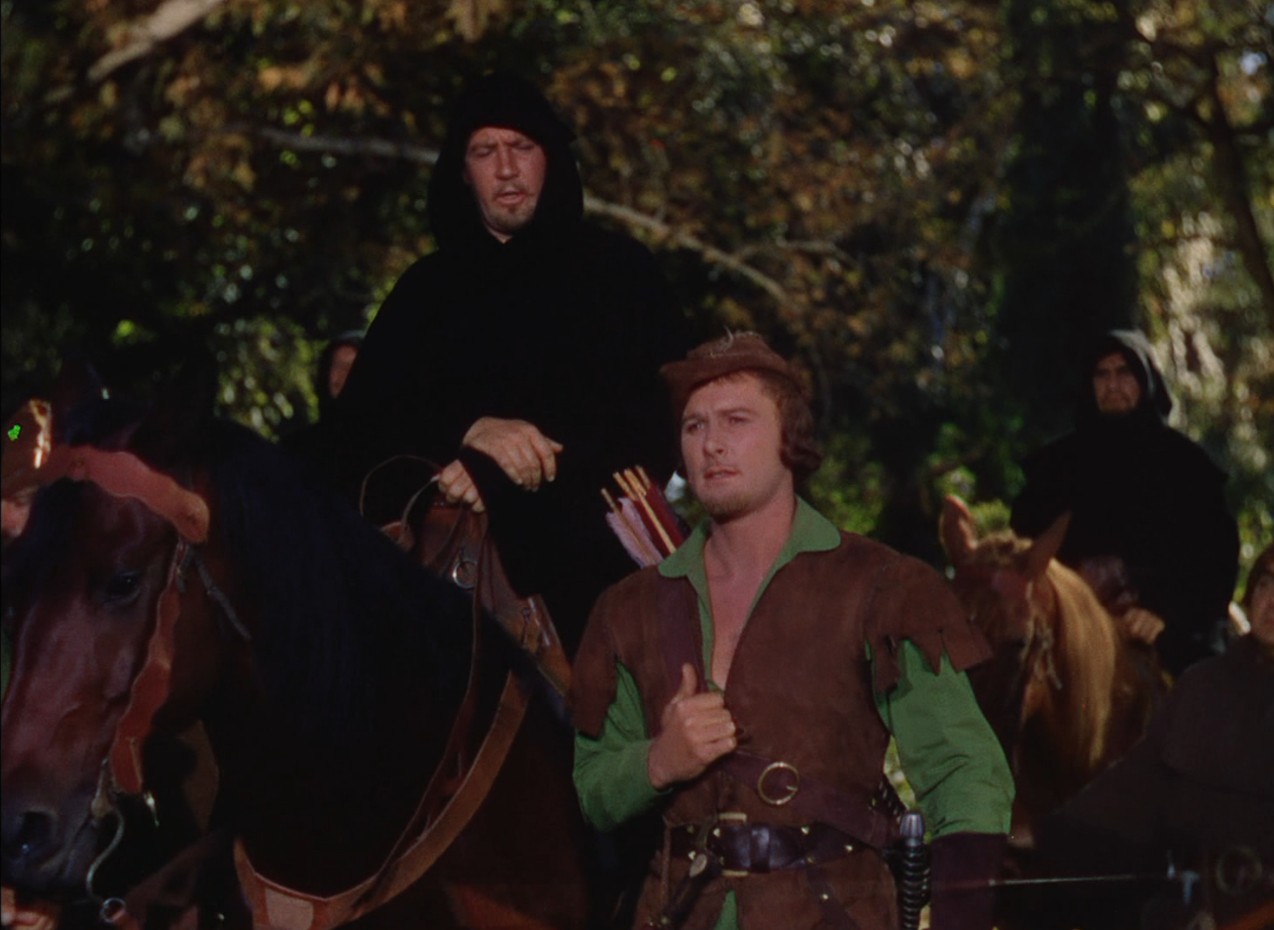
Errol Flynn's Robin Hood is opposed to the Crusades

ROBIN: No, I blame Richard. His task was here at home defending his own people, instead of deserting them to fight in foreign lands.

KING RICHARD (disguised as an abbot): What? You condemn Holy Crusade?

ROBIN: Aye, I'll condemn anything that leaves the task of holding England for Richard to outlaws like me.

    - The Adventures of Robin Hood, Warner Bros. 1938

Robin Hood stories have been critical of the Crusades since at least the early 19th century. In her book Myth and National Identity in Nineteenth-Century England, Stephanie Barczewski lists several Robin Hood books and poems that contain similar sentiments, serving as a critique of 19th century British Imperialism (pages 224-6). These references range from the anonymous 1805 The History and Famous Exploits of Robin Hood to the 1887 Edwin the Boy Outlaw by J. Frederick Hodgett. Hodgett shows the Crusades resulting from Richard's lust for blood and gold - a depiction similar to how writers James Goldman and Richard Carpenter depicted the Plantagenets in Robin and Marian and Robin of Sherwood, respectively.

Perhaps the most absurd rationale for the Crusades comes in the 1973 Disney cartoon when Prince John mentions his pet snake Sir Hiss hypnotized King Richard and "sent him off on that crazy Crusade."

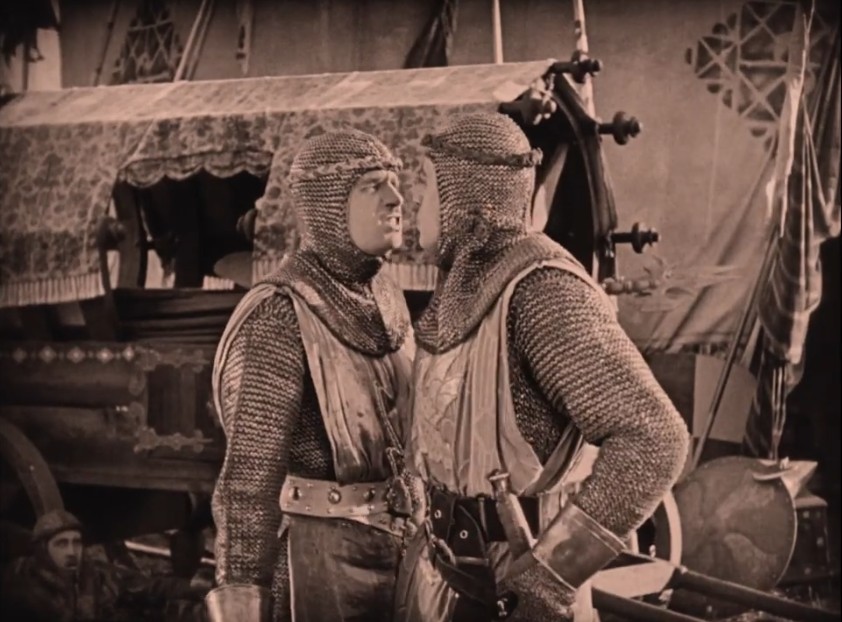
Douglas Fairbanks as the Earl of Huntingdon squabbles with Sir Guy of Gisbourne while on Crusade

Early Examples of Robin Hood as a Crusader

However, the 2006-2009 Robin Hood is far from unique in portraying Robin as a former Crusader. It's possible that the Crusading motif entered through Ivanhoe. While Robin isn't a Crusader in Ivanhoe, the title character Sir Wilfred of Ivanhoe is. In the 19th and 20th century, many elements of Sir Wilfred's story were transferred to Robin Hood. These include Sir Wilfred's Crusading background, battling Norman knights, rescuing his true love from a castle, conflicts with his father -- all of which became associated with Robin Hood in one story or another.

In Joachim H. Stocqueler's 1849 novel Maid Marian, The Forest Queen, Robin serves as an archer captain in the Crusades. This Robin returns home along with treacherous Saracens, Suleiman and Leila.

Much of the action in composer Reginald De Koven and librettist Harry B. Smith's 1901 operetta Maid Marian takes place while Robin is on Crusade - with the other characters also travelling to the Holy Land much as they do in the 2007 second series finale. Although not as popular as de Koven and Smith's earlier Robin Hood operetta (which featured Guy trying to marry Marian), this show was widely performed and likely influenced what came after.

In the 1922 film Douglas Fairbanks in Robin Hood, Robin rushes home after leaving for the Crusades in response to a note from Marian. It was the idea of the Crusades that convinced Fairbanks to make the film and it spends a lot of time in the Holy Land where the Earl of Huntingdon (the future Robin Hood) squabbles with Sir Guy of Gisbourne. Like in the later BBC/Tiger Aspect TV series, Gisbourne tries and fails to kill the king while he is on Crusade.

Robin Hood as a Crusader in the 1950s

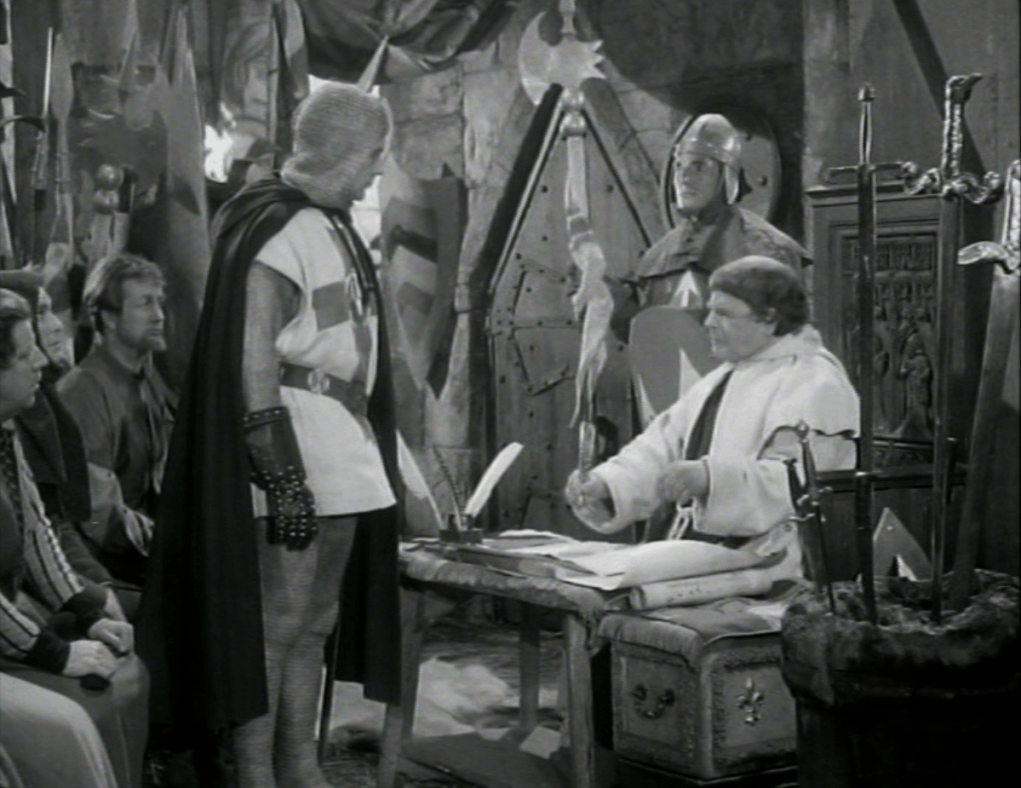
The 1950s TV series The Adventures of Robin Hood starring Richard Greene, and also the American comic books of the same era, begin with Robin returning home from the Crusade to find his castle seized by Prince John's allies. In the first episode of the TV series, Robin goes to the sheriff's clerk to protest. The clerk mocks his miliary service. It was designed to invoke recent memories of returning World War II vets.

Richard Greene's Robin Hood back from the Crusades

CLERK: You Crusaders are all alike. You volunteer to go to the war of your own accord, nobody makes you go, and then you expect special consideration because of it. Now please take your turn. Perhaps we'll be able to do something for you late tomorrow or the next day.

-- "The Coming of Robin Hood" by Ring Lardner Jr. and Ian McLellan Hunter

Robin comes back from the Crusades bearing a letter from the king that asks all officers of the crown to render him assistance. This allows him to regain Locksley Hall, but only briefly before it is lost again through treachery. The 1950s TV series was popular in both Britain and America, and it helped set the template that other Robin Hood movies and TV shows would follow. The Robin Hoods of Kevin Costner, Cary Elwes, Jonas Armstrong and Taron Egerton would all find themselves in the same predicament as Richard Greene's Robin Hood. They are all returning crusaders who had their lands stolen while they were abroad. 

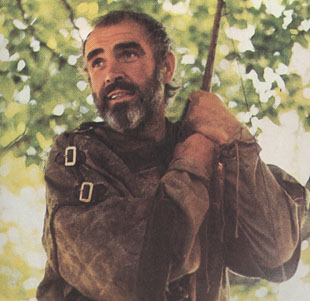
Sean Connery as Robin Hood

The Third Crusade as Vietnam

Robin's background as a Crusader is a notable part of the 1976 film Robin and Marian starring Sean Connery as an aged hero, returning home after 20 years of serving King Richard in the Crusades and in France. (In the name of supposed realism both Robin and Marian and the 2010 film Robin Hood distort history by eliminating Richard's return to England. Historically, as in the 1938 film, King Richard did return to England in 1194. These films make it seem if Richard's later campaigns in France followed directly from the Third Crusade with no return home.) In Robin and Marian, the Crusades serve as an allegory for the Vietnam War, with Robin morally troubled by his experiences in the Holy Land, particularly those in Acre. As Robin (with some degree of historical inaccuracy) explains to Marian,

ROBIN: On the 12th of July, 1191, the mighty fortress that was Acre fell to Richard -- his one great victory in the Holy Land. He was sick in bed, never struck a blow. And on the 20th of August, John and I were standing on the plain outside of city, watching as every Muslim left alive was marched out in chains. King Richard spared the richest for ransom, took the strong for slaves, and he took the children -- all the children -- and had them chopped apart. When that was done, he had the mothers killed. And when they were all dead -- three thousand bodies on the plain -- he had them all opened up, so their guts could be explored for gold and precious stones. Our churchmen on the scene, and there were many, took it for a triumph. One bishop put on his mitre and led us all in prayer. And you ask me if I'm sick of it?

- Robin and Marian, writen by James Goldman, 1976

Acre is also a source of contention between ex-Crusader Robin and the king in Clayton Emery's 1988 novel, The Tales of Robin Hood. In the new Tiger Aspect/BBC series, Much, Robin and guest character Harold are all haunted by the events of Acre. Of their nightmares, Much cryptically states "it's our punishment". In the 2010 film, Russell Crowe's Robin tells King Richard that the actions at Acre made them all "godless".

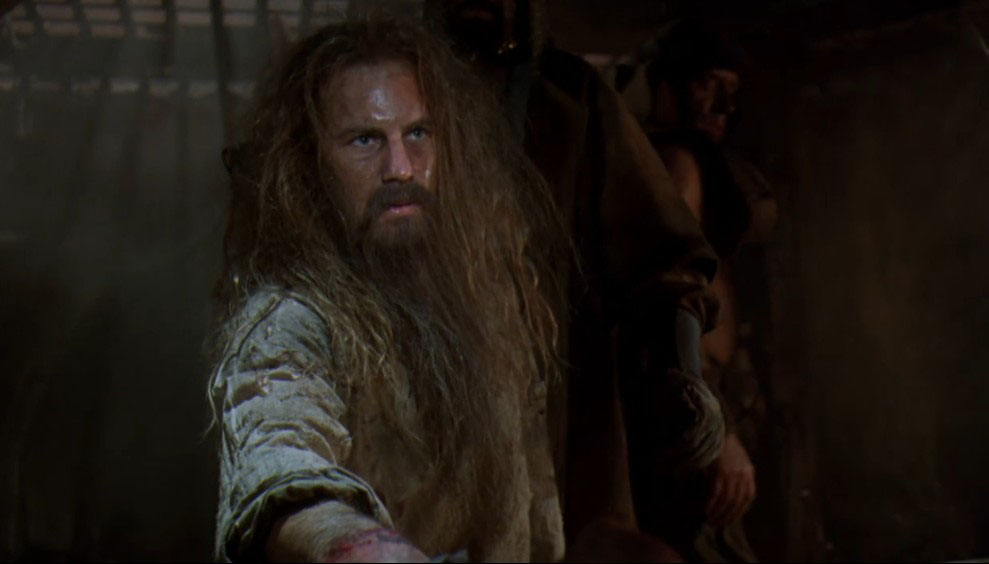
Kevin Costner's Robin Hood in captivity

Crusader Robin as a Prisoner of War

The 1991 movie Robin Hood - Prince of Thieves begins with Kevin Costner's crusader Robin locked up in a Jerusalem dungeon. Costner's Robin returns to England with Azeem, a much more positive Islamic role model than his 19th century counterpart, Suleiman. The movie was filmed during the Gulf War of 1990-1991, and the war would be fresh in the minds of the audience. But Robin's captivity harks back not to that year's war, but again to Vietnam. More specifically, the popular trope in the Rambo and Missing in Action film franchises of missing soldiers still surviving in captivity for over a decade. This idea was in the public consciousness during the 1980s.

1993's Robin Hood: Men in Tights satirized the 1991 film, and parodied these captivity scenes. Mel Brooks and his gang added a timely jab that the Sheriff avoided the Crusade by getting into the National Guard (a reference to 1989-1993 vice president Dan Quayle's much-questioned military service). 

Costner's Crusading adventure also influenced the novels of the 1990s, Despite having been tortured in prison for years, Costner's Robin didn't have many emotional scars. Since this film, some novels have given Mr. Hood the post-traumatic stress disorder common to Vietnam veterans. These books include Lady of the Forest by Jennifer Roberson -- where Robin's torture and imprisonment left him cursing in Arabic -- and the bodice-ripper The Thief's Mistress by Gayle Feyrer.

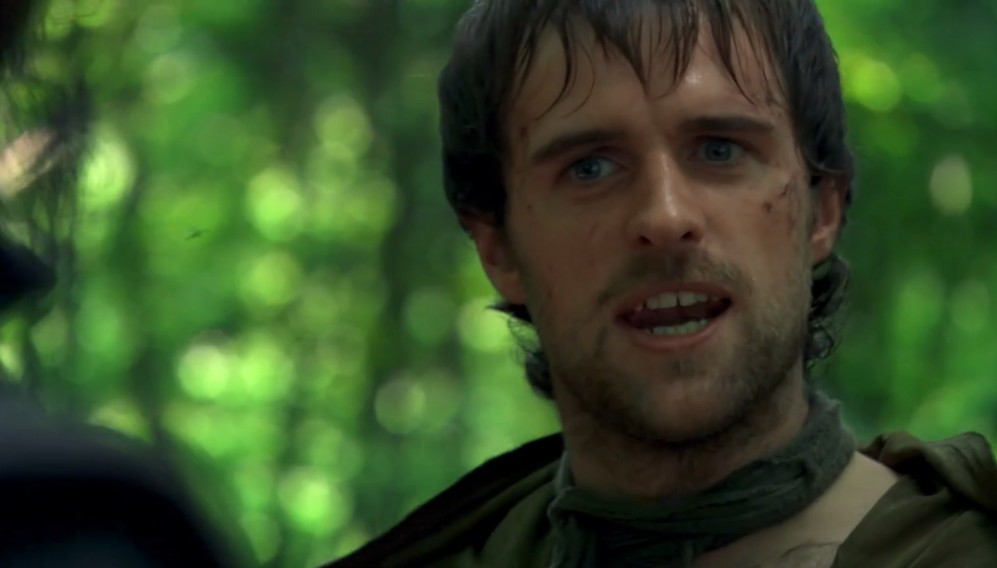
Jonas Armstrong's Robin Hood wounded at Acre

Robin Hood and the War on Terror, Part One: 2006 - 2009

In the 2006-2009 TV series (and later the 2010 film), the Third Crusade serves as a thinly-disguised allegory for the current "War on Terror" in Iraq. For example, the Sheriff only slightly paraphrases Tony Blair when he states "We stand shoulder to shoulder with Rome. Robin responds "And we fall shoulder to shoulder too, I have seen it." Like many Robin Hoods before him, Jonas Armstrong's Robin is critical of the need for a Holy War when he asks "Is it our Holy War, or Pope Gregory's?" The pope is obviously standing in for George W. Bush. My friend was annoyed with the unchallenged dismissal of Rome -- "either he's the head of their religion or they are all atheists!"

But the 2006 TV allegory is not entirely clear. While Robin does not believe in the war and is very tolerant of Islam (using Turkish weapons and quoting the Koran, for example), he still defends King Richard who he calls "a king with principles" in the 8th episode. Also, while the sheriff and Guy publicly support the war and King Richard, they are privately opposed to it and tried to assassinate the king.

Robin explains how he gained enlightenment and tolerance in the Holy Land

GISBORNE: There will always be war. So, let's have a king who will fight for our gain -- not the pope's.

ROBIN: Do you know why I went to war? To recover Jerusalem -- to recover our Holy Land. When I got there I met the Muslims and the Jews. And I saw it was their Holy Land too.

GISBORNE: What are you, Locksley? Lord of the Dance?

ROBIN: You're right. There will always be war. As long as people like you revel in their own ignorant bigotry.

Episode 8: "Tattoo? What Tattoo?" aka "The Assassin" written by Julian Mitchell

Still, one wonders who King Richard is in the political allegory. Tony Blair? Does he still support the Holy War? Is Robin's trust in the king misplaced, as in the Robin of Sherwood episode "The King's Fool"?

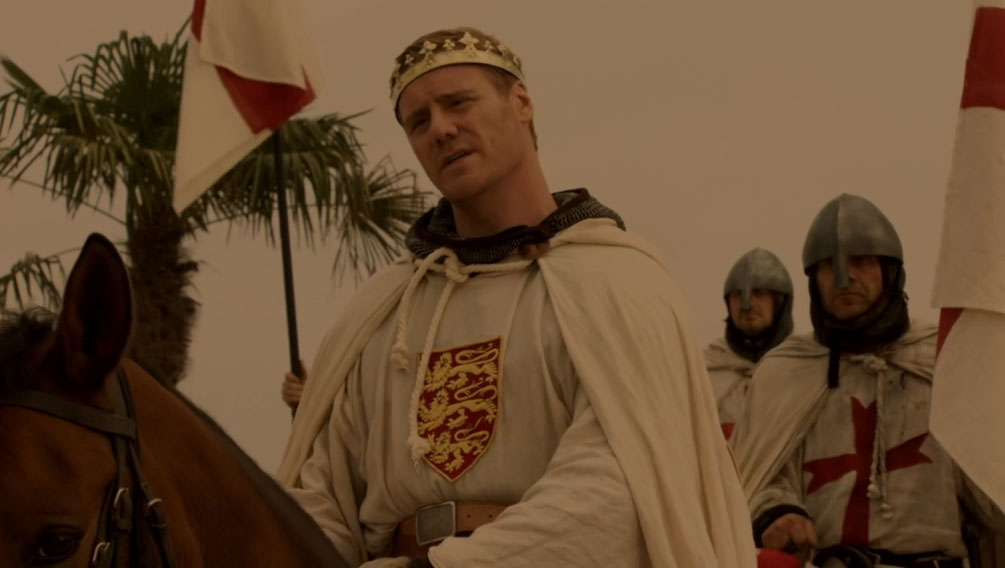
Steven Waddington as King Richard

I wrote the above words and the original version of this article in 2007, just before the start of Robin Hood's second series. In the second season finale ("We are Robin Hood" by series co-creator Dominic Minghella), all the regulars travel to the Holy Land. The sheriff and Gisborne are plotting another assassination attempt. Robin and the outlaws follow to foil the plot, and to rescue a captive Marian.

Steven Waddington (also the lead in the 1997 TV adaptation of Ivanhoe and the villainous Earl of Huntingdon in the 2025 Robin Hood TV series) appears as King Richard. He's mostly benevolent but easily duped into believing Robin is plotting against him. The king says he wants peace. But at the episode's end, he stays in the Holy Land. 

The compromise of having a good King Richard leading a bad war never quite sat well. But perhaps this is part of the constraint in having a Robin Hood series made for family viewing in the 21st century.

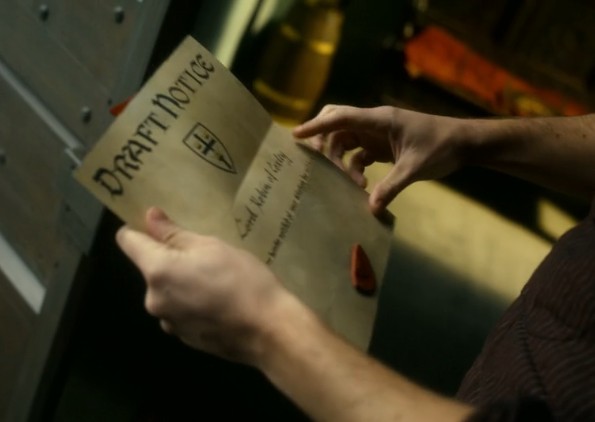
Robin of Locksley receives a draft notice

The 12th century Robin receives a 20th century style draft notice

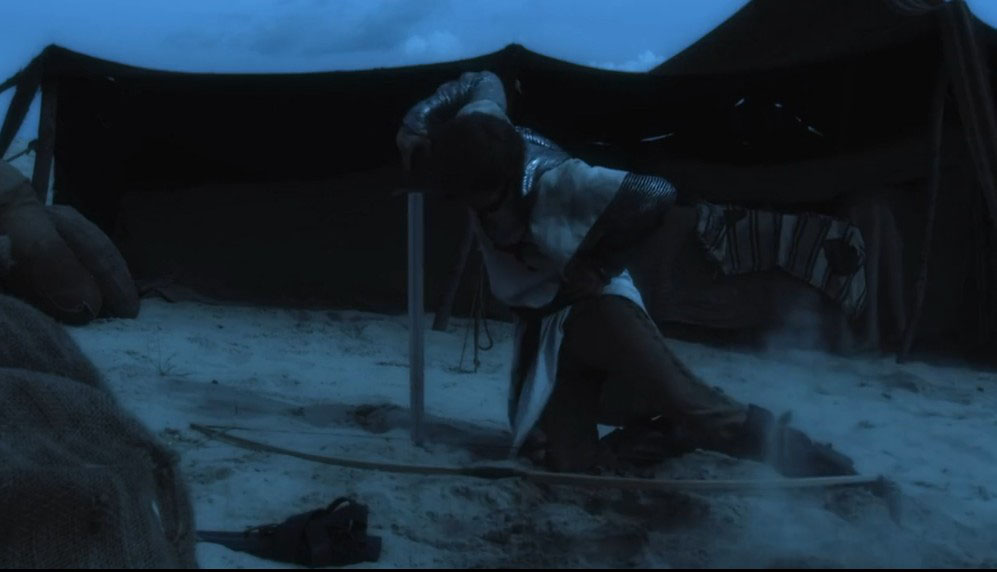
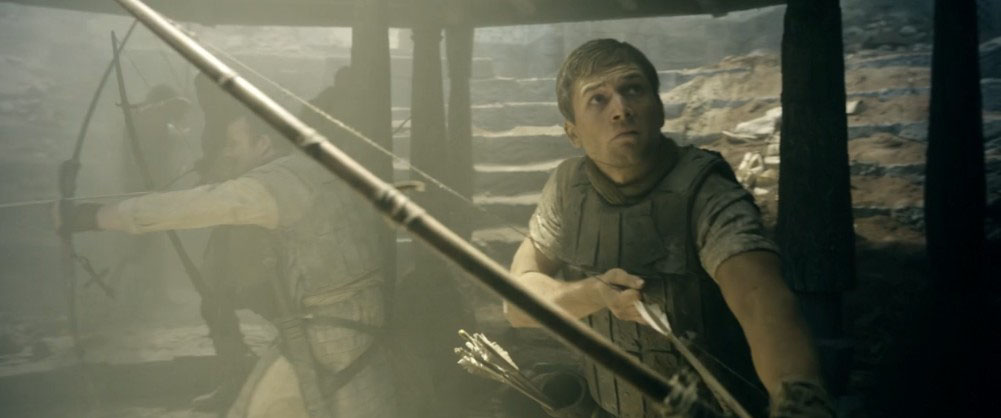
Robin fights in Arabia

The 2018 Robin Hood on Crusade

Robin Hood and the War on Terror, Part Two: 2018

The 2018 Robin Hood film starring Taron Egerton also used the wars in Iraq and Afghanistan as their model for the Third Crusade. While as discussed below, the 2018 film borrowed much from the earlier TV series, it went a bit further.

Robin is called up to fight in the Crusades when he receives a Vietnam-style draft notice. (In a film with many modernizations, the giant Draft Notice on parchment is possibly the most charmingly absurd.) This Robin Hood doesn't wear a medieval surcoat. Instead we see him in a t-shirt and armour that resembles modern-day tactical vests. Robin and his comrades walk through the deserted streets, holding their longbows as if they were assault rifles.

Robin Hood -- Prince of Thieves showed a dungeon run by evil Muslims. In the 2018 movie, it's the English Crusaders who torture prisoners. This is likely a comment on the Abu Ghraib prison scandal in the Iraq War.

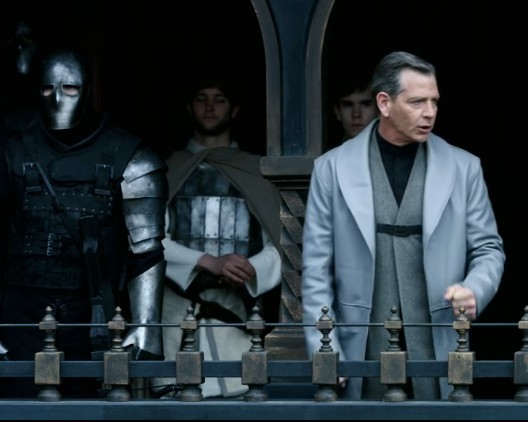
The Sheriff of Nottingham seeks to raise money for the Crusades, and his speech borrows some of the words of former US president George W. Bush.

The Sheriff giving his speech

THE SHERIFF:  Good day, good people. Today we face a threat from these barbarians in Arabia. They hate us, our freedom, our culture, our religion. But today, they face the near enemy, which is our Crusaders in the desert.

-- Robin Hood (2018), Screenplay by Ben Chandler and David James Kelly

The sheriff goes on to say "Nottingham isn't just a city. It's the bank and beating heart of our great church and its glorious crusade." The film exaggerates the importance of Nottingham quite a bit -- moving it to the centre of European politics and commerce. As with the 2006 TV series, the importance of the king is downplayed.

It seems likely that the Robin Hood legend will continue to adapt the Crusades to meet the political situation most familiar to modern audiences.

You Look Familiar:
The 2006 Robin Hood TV Series and the 2018 Robin Hood Movie

by Allen W. Wright

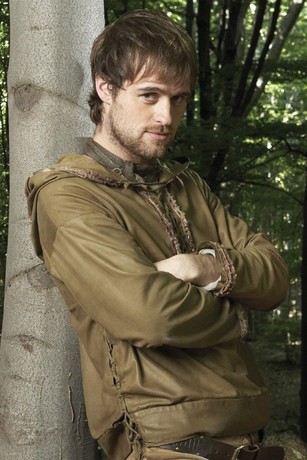
Jonas Armstrong
Robin Hood, circa 2006

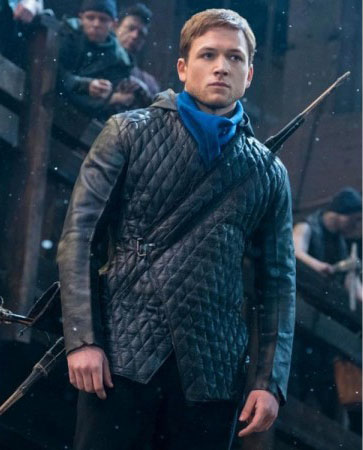
Taron Egerton as Robin Hood

Taron Egerton
Robin Hood, 2018

Robin Hoods for Playstation Generations

The 2006 Robin Hood TV series was billed by its creators as "Robin Hood for the Playstation Generation". It modernized the legend by putting Robin Hood in medievalized versions of contemporary fashion -- most notably Robin's hoodie from the first two series.

A dozen years later, the 2018 Robin Hood film also provided its characters with a medieval modern look. Taron Egerton's Robin favours a long-quilted puffy coat which Yahya - the movie's Little John analogue - cuts down into a jacket.

Both Armstrong's and Egerton's Robin blend in more with the contemporary fashions of when their productions were filmed than with the Middle Ages -- and that was a deliberate choice.

And as described above, both the 2006 TV show and the 2018 film comment on the then-contemporary wars in Iraq and Afghanistan. 

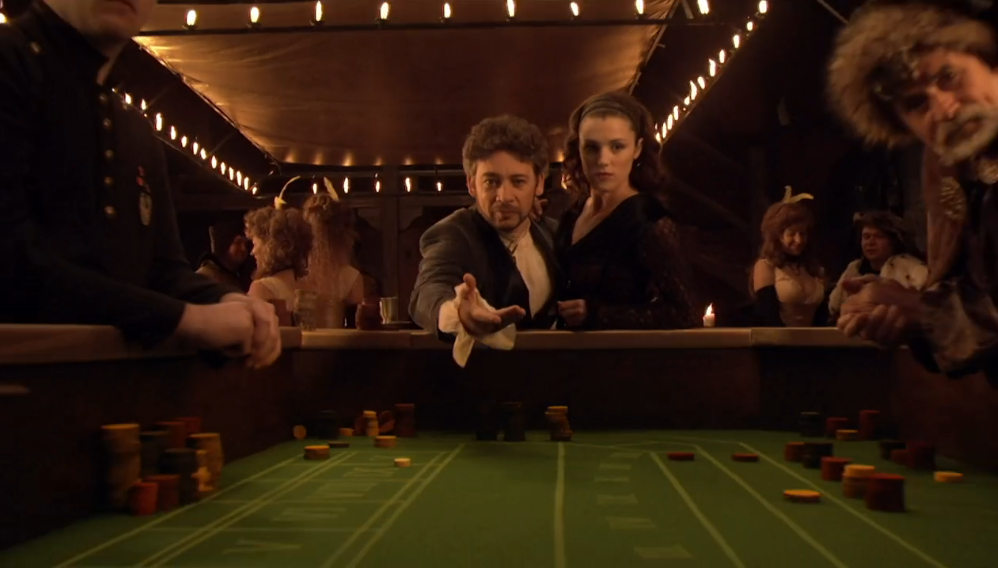
A medieval casino in the 2006 TV series

2007: Lucy Griffith's Marian at the casino

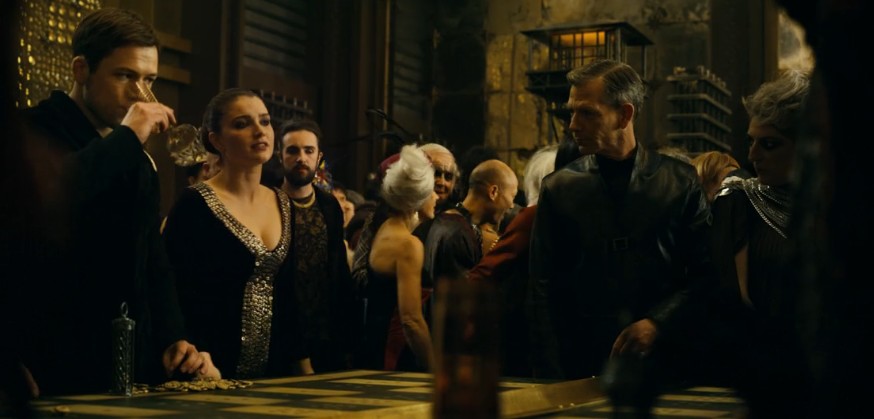
Marian at the gambling table in 2018

2018: Eve Hewson's Marian at the casino

Characters and Situations Shuffled

The similarities don't just stop with Robin Hood.

The Marian played by Lucy Griffiths and the Marian played Eve Hewson look vaguely similar and both have double lives. Both Marians also find themselves at a fairly modern casino, such as in the 2007 episode "The Beast and the Booby". Although the idea of Marian at a casino didn't originate with the BBC/TigerAspect series. Misty Rowe's Marian entertained Dudley Moore's sheik at a Nottingham casino in the 1975 situation comedy When Things Were Rotten.

With other characters, personality traits were shuffled.

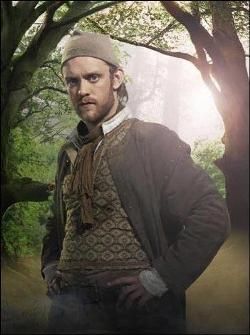
Much played by Sam Troughton

2006: Sam Troughton as Much

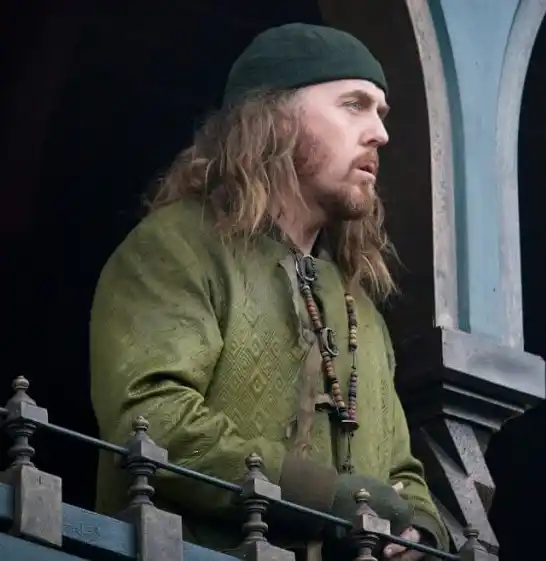
Tim Minchin as Tuck

2018: Tim Minchin as Tuck

The BBC/TigerAspect TV series featured featured Sam Troughton as an excitable, semi-comic, scraggily-haired cap-wearing Much the Miller's Son and the 2018 film features singer, actor, comedian Tim Minchin as an excitable, semi-comic, scraggily-haired, cap-wearing Tuck.

On TV, Lucy Griffiths's Marian has (at least to some extent) feelings for both Jonas Armstrong's Robin and Richard Armitage's morally-conflicted Guy of Gisborne. Eve Hewson is also torn between Taron Egerton's Robin of Loxley who she believed had died in the Crusades and Jamie Dornan's Will Tillman -- a community activist who has his own moral dilemma. 

Different Influences

There are some notable differences between the 2006 and 2018 Robin Hoods. Some of that has to do with the years in which they were made, and some of that has to do with the age of the audience. While the TV Robin Hood was going for the family audience that loved BBC's Doctor Who, The first series has a DVD rating of PG for the UK releases, although the later two series had a 12 rating. The North American release of the 2018 Robin Hood movie has a PG-13 rating and the UK DVD releases carry a 12 rating.

A key influence on the 2018 film that fans noticed right from the trailer was the Batman films directed by Christopher Nolan and starring Christian Bale, most notably 2008's The Dark Knight. Will Tillman's character has a similar arc to the character of Harvey Dent. In The Dark Knight, Dent is a crusading district attorney who is also dating Batman's ex-girlfriend (a key departure from the comic book version of the character) who is then scarred and transformed into the criminal Two-Face. In the 2018 Robin Hood, Jamie Dornan's Will is Marian's new boyfriend who is scarred and ends up as the new Sheriff of Nottingham. This would not have been an obvious source of inspiration for the BBC/TigerAspect TV series - as they'd have been filming the final season as The Dark Knight appeared in movie theatres.

The Dark Knight (and its own Robin Hood-inspired TV clone Arrow) might have also inspired the urban hellscape of Nottingham in the 2018 film. The BBC/TigerAspect TV series spends more time in Sherwood Forest and has a much-different feel even though the fashion sense of the 2006 and 2018 Robin Hoods are similar.

The 2018 film also taps into the political movements that arose or grew in prominence after the BBC/TigerAspect series ended. Occupy Wall Street (2011), the Million Mask March (2012) and Black Lives Matter (2013 and beyond) are reflected in the iconography of the 2018 Robin Hood movie from the protests in medieval-modern Nottingham to the ending credits sequence.

And yet, while all Robin Hood films and TV shows aspire to be relevant to the audiences in which they are made, the consciously modern look of both the 2006 TV series and 2018 movie are things that have not been replicated in the Robin Hood TV shows and film of 2025 and 2026. 
Links to Other Sites About The 2006 Robin Hood TV Series

Here is a selection of other websites that deal with the 2006 - 2009 Robin Hood TV Series from BBC/TigerAspect. Sadly many of the websites available when the TV show was on the air have vanished.

  • BBC DRAMA: ROBIN HOOD - The official website for the 2006 Tiger Aspect series airing on BBC One, starring Jonas Armstrong as Robin.
  • ROBIN HOOD ON DOMINIC MINGHELLA'S SITE - Comments and responses from the show's co-creator Dominic Minghella
  • ROBIN HOOD AT BIG FINISH - The audio drama production company produced original audio books with the voices of Jonas Armstrong, Richard Armitage, Sam Troughton and David Harewood.  The stories are either set during the third series or flashback to before the show's main timeline
  • A DIFFERENT KIND OF HOOD - A 2019 website that celebrates the TV series with many pictures
  • THE LAW LASS: TV AUTOPSY - A good retrospective from a fan who has a special affection for the series, but also a critical eye as to some of its missteps. I find myself agreeing with much of this
Where to go from here:

PREVIOUS:

  • MAIN PAGE - Just the index for the articles on the BBC / Tiger Aspect TV series
  • SERIES ONE REVIEW - The original article written in 2007 looking at the 2006 debut season with updates for 2026's 20th anniversary
  • SERIES TWO REVIEW - Reflections on the much-improved second season of the show.
  • SERIES THREE REVIEW - A look at the revamp for the final season
If you enjoyed this Spotlight, check out the following:
And if you're done with the 2000s TV series:

NEXT:

If you enjoyed this Spotlight, check out the following:

Contact Us

© Text and Location pictures, Copyright 2026 Allen W. Wright - All Rights Reserved
Other pictures and quoted text are copyright their respective owners and used under fair use for the purpose of criticism and review.
The 2006-2009 Robin Hood TV series is copyright BBC and TigerAspect and is used without permission under fair use for the purposes of criticism and review
This page is a part of Robin Hood -- Bold Outlaw of Barnsdale and Sherwood