Starring Martin Potter, Diane Keen, Paul Darrow, John Abineri, William Marlowe, David Dixon, Miles Anderson, Stephen Whittaker, Tony Caunter, Conrad Asquith, Richard Speight and Michael-John Jackson
Written by Alistair Bell, Robert Banks Stewart, David Butler and Alexander Barron
Directed by Eric Davidson
Original UK Airdate: November 23 - December 28, 1975
6 Episodes
This family serial for the BBC in the UK later aired on PBS's Once Upon a Classic and A&E's Family Classics in the United States.
Although the show was specifically aimed toward family audiences, Martin Potter is one of the very few screen Robin Hoods to play a death scene.
The show deserves to be better remembered than it is.
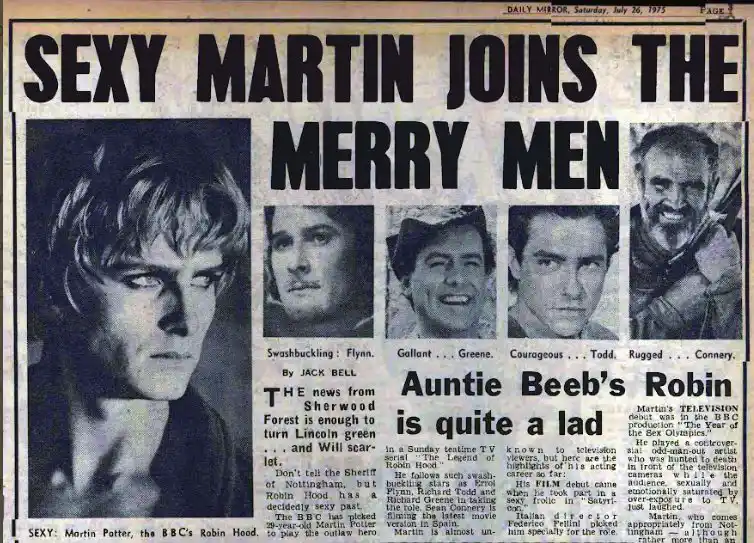
The July 26, 1975 edition of The Daily Mirror announced Martin Potter's casting in the forthcoming Robin Hood TV series by proclaiming him to be the "sexy" one. (The photo captions labelled Errol Flynn as "Swashbuckling", Richard Greene as "Gallant", Richard Todd as "Courageous" and Sean Connery -- whose film Robin and Marian wouldn't be released until the following year -- as "Rugged".)
The adjective "sexy" makes sense given Potter's film and TV credits up to that point. His big film role was as the lead in Federico Fellini's hedonistic 1969 movie Fellini Satyricon. His TV debut in 1968 in The Year of Sex Olympics further justified the newspaper headline. On the face of it, it was odd casting for what promised to be a "Sunday TV serial" designed for family audiences. Potter's relationship with Diane Keen's Maid Marian -- or Lady Marion as the show would style it -- was to be far more chaste than anything envisioned by Fellini.
But Potter did have one element in his biography that would recommend him for a Robin Hood production and make him a part of Robin Hood trivia minutia for decades to come -- Martin Potter was born in Nottingham.
In the same article, Potter mentions growing up with Richard Greene's Robin Hood but that the BBC wanted the swashbuckling adventures of Errol Flynn instead. They ended up with something that was unlike most film and TV Robin Hoods of the past. It's left up to your own interpretation if they succeeded in their goal to "make Robin Hood a real person"
One might think the combination of storybook elements, stilted literary dialogue and a true sense of grimness and sometimes brutal violence would make a strange family show but it was in keeping with the 1970s.
By then, the Robin Hood legend had been split in two. 1973 had seen the release of both the grim Wolfshead: The Legend of Robin Hood (although it had been filmed in 1969) and the popular Disney cartoon Robin Hood. When The Legend of Robin Hood debuted in the UK, American audiences were still watching first-run episodes of the Mel Brooks sitcom When Things Were Rotten. The British show -- although made with younger audiences in mind -- was a dark reflection of its American counterpart.
The Legend of Robin Hood was produced to be one of the BBC’s Sunday tea time serials. These shows were historical and literary adaptations— often praised for the quality of the writing. The BBC’s accountants might also have praised them for their low budgets -- even if few actual viewers did.
The person most directly responsible for the quality of the writing would be Alistair Bell who wrote the first episode, co-wrote the final episode and served as script editor for the whole series — adjusting the scripts of others. By 1975 Bell already had an impressive TV pedigree especially at tea-time. He wrote the well-regarded 1970 adaptation of Little Women and the 1973 TV series Hawkeye, the Pathfinder. The Hawkeye series was a sequel to 1971’s The Last of the Mohicans for which Bell had served as script editor. He was script editor on serials such as The Elusive Pimpernel (1969), Anne of Green Gables (1972), Jane Eyre (1973), David Copperfield (1974) and The Master of Ballantrae (1975) to name just a handful.
Robert Banks Stewart wrote the second and third episodes and co-wrote the final episode with Bell. He also has a lengthy TV resume, although not so much with the classic serials. At the time, his name would be most associated with the adventure shows aired on the Independent Television channels - classics such as The Avengers, The Saint, The Protectors and five episodes of their gritty, less romanticized Arthurian series Arthur of the Britons. Viewers of the BBC would most recently have associated him with the creation of the Zygons on Doctor Who, and shortly after the conclusion of The Legend of Robin Hood, Stewart would contribute the Krynoids to the Doctor's rogues gallery.
The fourth episode is written by actor-turned-writer David Butler, who has a good claim for being the person to initiate the modern, more realistic cinematic Robin Hood. He both wrote and appeared in (as friendly forester Will Stukely) the largely forgotten but still influential TV pilot (later released as a B-movie) Wolfshead: The Legend of Robin Hood. Butler's earlier project drew heavily from the medieval ballads and his episode of this show adapts the late medieval ballad A Gest of Robyn Hode.
The fifth episode is credited to Alexander Barron, although the writer born Joseph Alexander Bernstein generally spelled his pseudonym Alexander Baron -- with a single R in the surname. Baron's World War II-era novels had some acclaim, and he already had Sunday tea-time experience as the writer of the 1970 TV adaptation of Ivanhoe, script-edited by Alistair Bell. He would go on to write more literary adaptations after his time with Robin Hood including the 1982 The Hound of the Baskervilles starring Tom Baker and the 1984 TV episode "A Scandal in Bohemia", the debut episode of The Adventures of Sherlock Holmes starring Jeremy Brett.
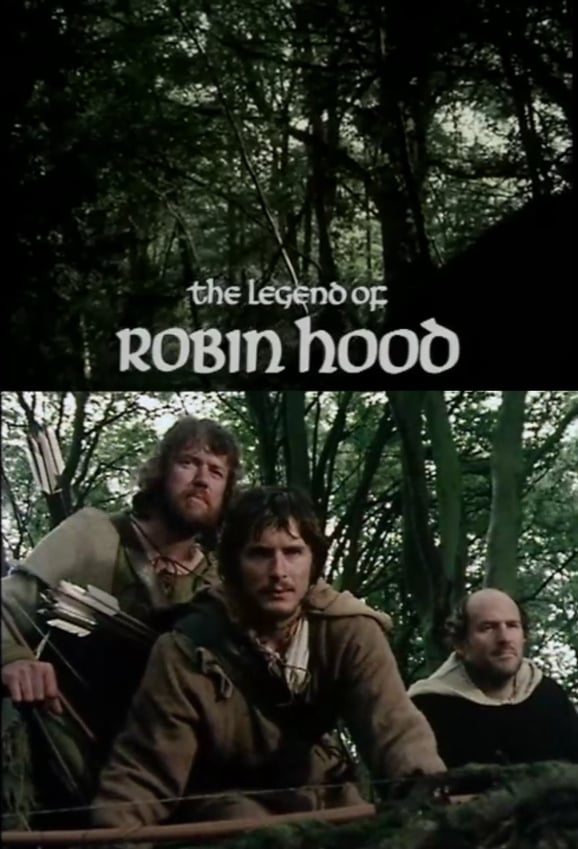
The literary feel of The Legend of Robin Hood is established with the very first scene where the Earl of Huntingdon (Anthony Garner in the briefest of appearances) gives up his infant son to be fostered by a humble forester. He does this for the child's protection as the earl needs to go to France, and he fears that some would kill the child to get his lands and title.
The idea of the fostered hero is a classic trope of myth (points 7,8 and 9 of Lord Raglan's scale for assessing the mythic nature of a hero). It's true of Moses, King Arthur, Superman and Harry Potter to name but a few. And yet the way it's presented here seems less mythic than merely literary.
There is a precedent for this in the Robin Hood tradition, and based on other elements of the show, it was a likely source. Pierce Egan the Younger began his 1838 serialized novel Robin Hood and Little John (collected in book form in 1840) with the infant earl's son being placed with a forester -- Gilbert Head (the surname later corrupted to Hood). In the case of Egan's novel, he was fostered so the Huntingdon title could be usurped without murdering the child. And yet Egan's tale would likely cross the English Channel twice before inspiring the TV series.
Egan's novel was a widely-reprinted best-seller in the early Victorian era. So popular that it was translated into French by Alexandre Dumas -- writer of The Three Musketeers and The Count of Monte Cristo. When Egan's novel made it to France, his name was scrubbed off it in favour of the even more famous French author. And then a few decades later, the story was translated from Dumas's two-volume novels Le Prince des Voleurs and Robin Hood, Le Proscrit into the English books The Prince of Thieves and Robin Hood, the Outlaw by Alfred Allinson. Allinson gave Dumas the credit, not Egan. (Dumas made a couple minor changes from Egan, and other elements of the TV series reflect those changes which suggests the influence came from Dumas/Allinson and not directly from Egan's original.)
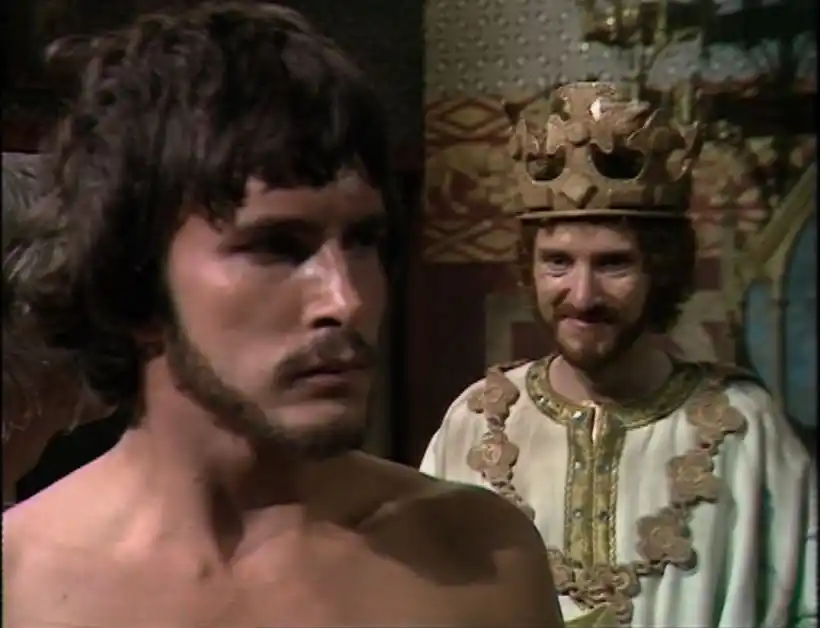
In the TV show, when Robin learns of his true parentage, he's sent to see King Richard. And in a classic literary trope, the king recognizes he is the true heir by a birthmark.
KING RICHARD: Take off your tunic. (Robin hesitates.) Take off your tunic.
LONGCHAMP: Do as his grace says. (Robin does.)
KING RICHARD: Quickly, I'll not stab you in the back. If you're an impostor, the hangman will deal with you quickly enough. Now take off your shirt. Yes, yes, come along. (Robin does so angrily.) Beneath his left shoulder blade is a birthmark of a certain size. Longchamp, what do you see?
LONGCHAMP: No bigger than a silver penny, it is there, sire.
(King Richard chuckles.)
ROBIN HOOD: Sire, I came here in honour-bound ... not to be laughed at!
KING RICHARD: Ah, he has a temper, has our young Earl of Huntingdon. Welcome my lord, you are indeed the long lost heir of your noble father. Your king welcomes you.
Part One written by Alistair Bell
Michael-John Jackson gives an interesting performance as King Richard the Lionheart. He's not the Good King Richard of many versions. Nor is he the outright villainous Richard of Robin of Sherwood. This king is wise and cunning, but also angry and capricious. He is affected by slights. When the deception that causes him to outlaw the newly ennobled Robin is revealed, the king is still angry and does not rescind the sentence of outlawry.
He fits very much with the complicated King Richard of James Goldman's 1966 play and 1968 film The Lion in Winter. Goldman picks up on the medieval rumours that Richard was gay or bisexual. And that also forms the subtext of Goldman's 1976 film Robin and Marian which was well underway when this TV series was filmed.
The same subtext came be glimpsed in The Legend of Robin Hood, although less directly so as this was a series for children. It is also in keeping somewhat with the 1922 film Douglas Fairbanks in Robin Hood were Wallace Beery's King Richard also seems almost jealous of Robin's interest in Marian. In The Legend of Robin Hood, the king is surprised when his mother Queen Eleanor remarks on both the budding romance between Robin and Marion, but also Richard's inability to understand affection -- whether it be the romance happening under his nose or his mother's fondness for home.
At times, the king almost acts as a jilted lover.
KING RICHARD: You think I'm a fool? You think your feelings for the girl had escaped me?
ROBIN: I assure you I had no intention of concealing them from you, your grace. Indeed I promised the Lady Marion I would talk to you.
KING RICHARD: You put me in a very delicate situation.
ROBIN: My heartfelt apology.
KING RICHARD: Her uncle made her my charge at court. And then there's Sir Guy of Gisborne, he has the right to expect a fair chance to press his suit. And here you are coming between him and the maid's affections, wooing her under my roof.
ROBIN: Well, not deliberately. It doesn't happen like that.
KING RICHARD: Do you think I don't know about mutual affection? I didn't ask to take a liking to you. But you appeared and I made you my squire. And now in a sense you betray me.
ROBIN: Hardly that, your grace.
KING RICHARD: Oh, isn't it? Sit down. Apart from my embarrassment at the situation, there is the matter of your moral on the Crusade.
ROBIN: All the better because of her.
KING RICHARD: Oh you might think that now. But i know what it is for men in battle to have thoughts of loved ones. They pine, their bravery is impaired.
Part Two written by Robert Banks Stewart
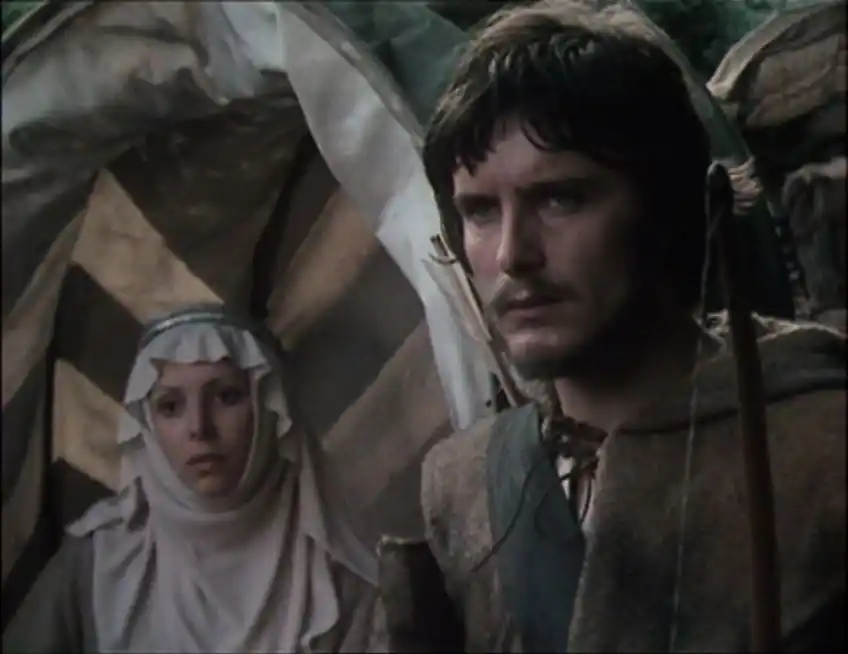
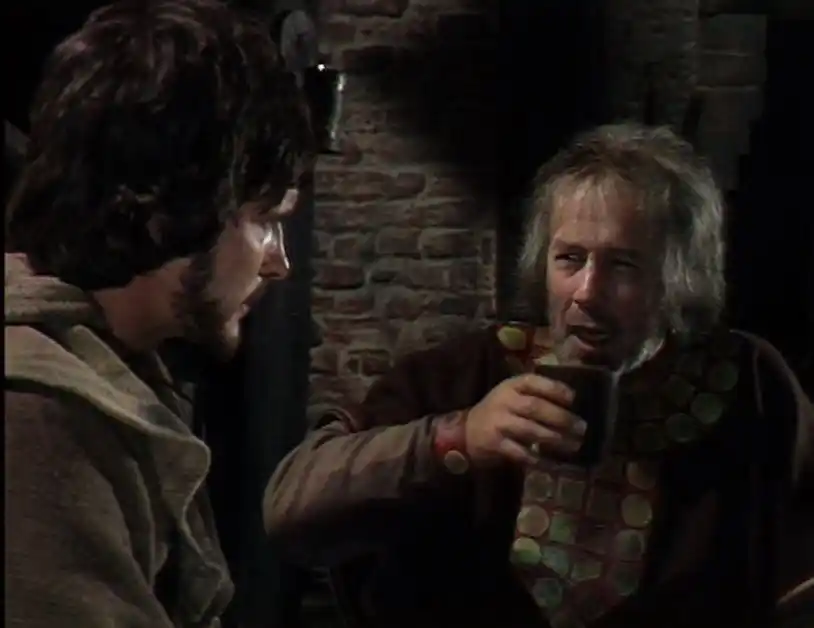
Robin first encounters Lady Marion (Diane Keen) and her uncle Sir Kenneth Neston when her carriage breaks down in the mud. Robin offers to help. He later encounters them in the tavern. Sir Kenneth is set on marrying his niece to Guy of Gisborne -- even when Robin gains his earldom and has a higher status than Sir Guy, Neston sticks to his original plan.
It's not about finding Marion a good husband. Sir Kenneth's scheme has to do with the conflict between Normans and Saxons -- something which became a prominent part of the legend with Sir Walter Scott's 1819 novel Ivanhoe. (And remains a key element in the 2025 Robin Hood TV series.)
The alcoholic Sir Kenneth Neston is played by British character actor John Abineri. Robin Hood fans might know him better as the mystic Herne the Hunter in Robin of Sherwood, (One could make quite the family tree based off Abineri's roles. He's Marion's uncle here. In Robin of Sherwood, Robin is called "Herne's Son". Abineri plays the uncle of the Robin Hood-like Roj Blake in the sci-fi TV series Blake's 7. And he's the father of anal-retentive hologram Arnold J. Rimmer on Red Dwarf.)
NESTON: The time is demanding. You see, we're a conquered race, lad. The Normans rule us from their castles. We are many. They are few. Marry them to our daughters and in three generations we'll have drown them in a sea of honest Saxon blood.
ROBIN: And that is your plan to save England?
NESTON: Too deep for you, eh?
ROBIN: And your niece is to be the first one?
NESTON: She has that honour.
ROBIN: Guy of Gisborne. He hangs men for picking berries off his bushes.
Part One written by Alistair Bell
Marion isn't as keen as her uncle on marrying Sir Guy, and she does put off the intended wedding by making a vow not to wed until the king returns.
Diane Keen is handed something of a thankless task as Marion. She is not the clever spy of the 1938 film, or the spy and part-time outlaw of the 1950s TV series, and certainly not the combat ready Marian of later TV shows and films. The most notable role is when she convinces her uncle to house and feed the starving children of a village.
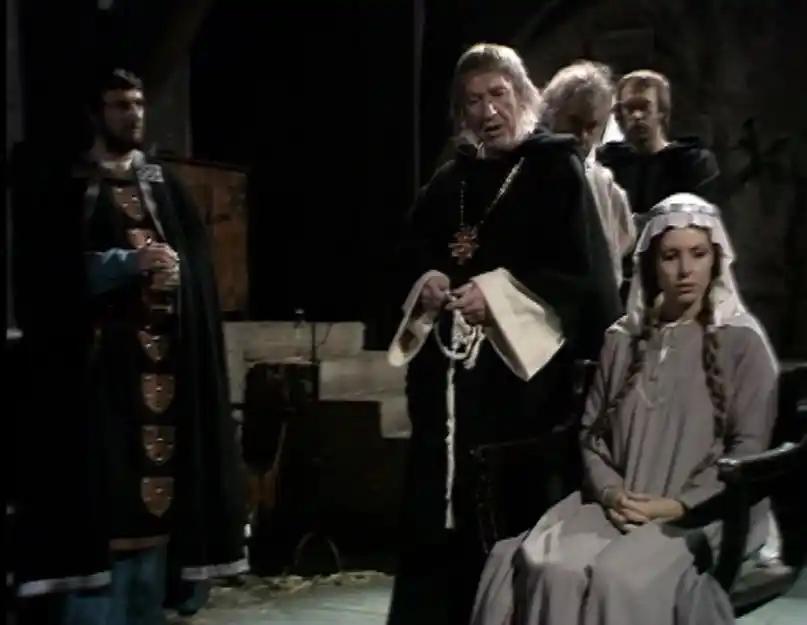
She also shows strength in resisting the pressure of her uncle, the Sheriff of Nottingham, the abbot of St. Mary's (guest actor Kevin Stoney) and the abbot's sinister military prior played Roy Marsden. A few years later Marsden would play Director of Operations Neil Burnside in possibly the greatest espionage TV series of all time -- The Sandbaggers. Diane Keen plays Burnside's agent and ill-fated lover Laura Dickens in that show. It's fun to see them in the same room here too.
As much as Marion loathes Sir Guy (William Marlowe) and his cruelty, she does want to please her uncle. When Marion expresses concern over Robin's hardening ways as an outlaw, it can make her seem as a bit of a drip.
In the fifth episode, she rejects Robin's offer of a necklace -- one of the few stolen goods that Robin allows himself to keep
ROBIN: You don’t want it? But it’s beautiful.
MARIAN: It is also stolen, is it not?
ROBIN: Yes, I suppose it is.
MARIAN: You suppose?
ROBIN: I see. You are now about to preach to me, are you?
MARIAN: No, my lord. Merely to say how much it hurts me that the way of life you have chosen has changed you without you being aware of it.
ROBIN: There is no other way of life open to me. Only a way of death. Up the steps of a scaffold and a hangman’s noose around my neck. Is that the road you’d have me travel? Is it?
MARIAN: Only you can decide what you must do. It is the same for me.Now I must go.
ROBIN: When will I see you again?
MARIAN: So that we may quarrel again, more bitterly than before?
ROBIN: It is not always like that.
MARIAN: Oh, yes, it is. It seems we can do nothing else but quarrel. Our love is like a desert. Nothing good can come from it. It can only destroy.
Part Five written by Alexander Barron
The Old Woman gives a prophecy
Picking Berries is a crime
After Robin first meets Marion, a old woman emerges from the bushes and comments on Robin admiring Marion's beauty. She says Marion's beauty will wither and die ... just like her own did. And then the old woman makes a prophecy.
OLD WOMAN: You do not fear old age or death.
ROBIN: Fear death? I seldom think of it.
OLD WOMAN: You need not fear it. For you will never die. Save by a woman's hand.
ROBIN: What?
OLD WOMAN: Save by a woman's hand, you will never die
Part One written by Alistair Bell
An old woman prophesizing death fits in with the mythic tradition of "the washer at the ford" who foreshadow one's death. And in the A-version of the ballad Robin Hood's Death, Robin encounters just such a figure.
But this is not the only foreshadowing to the death of Robin Hood in the first episode.
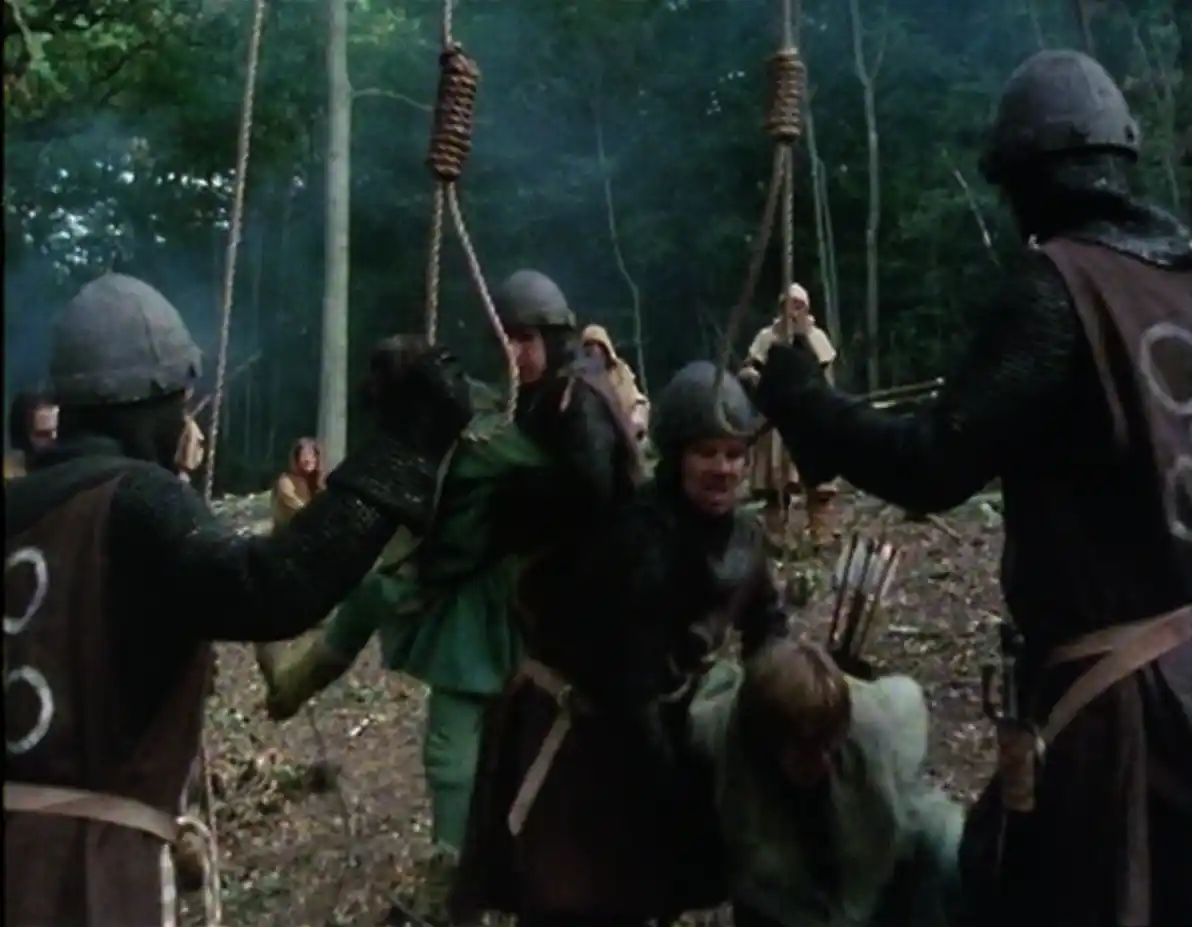
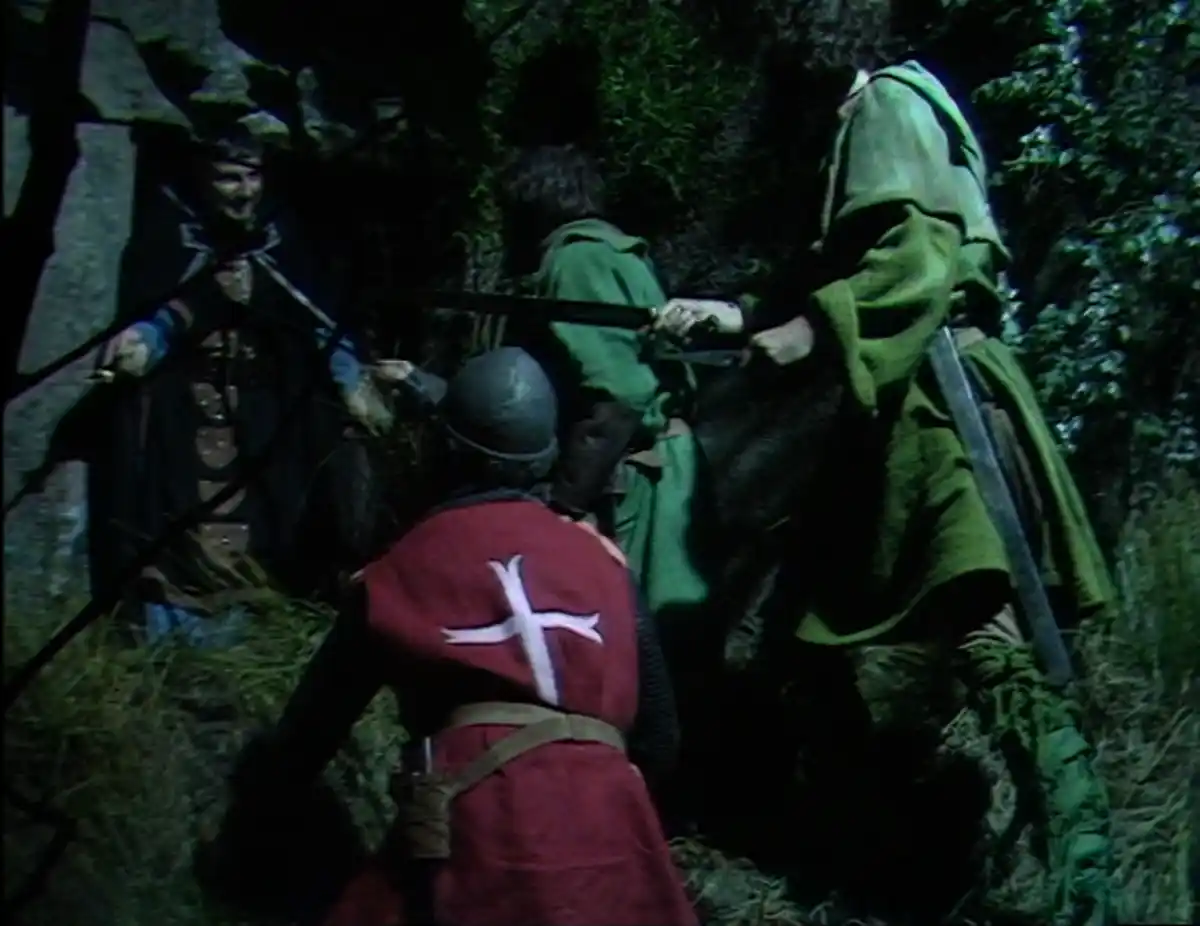
A common trope from the Errol Flynn film onwards is that Robin rescues a poacher. This time, Robin is the poacher ... and he's within his legal rights as the son of the king's forester to hunt the deer. Richard Greene's Robin made a similar claim in the first episode of the 1950s TV series. The Normans he encounters have another prisoner -- but this one wasn't poaching deer. No, this prisoner was sentenced to death for picking berries off Sir Guy of Gisborne's berry bushes.
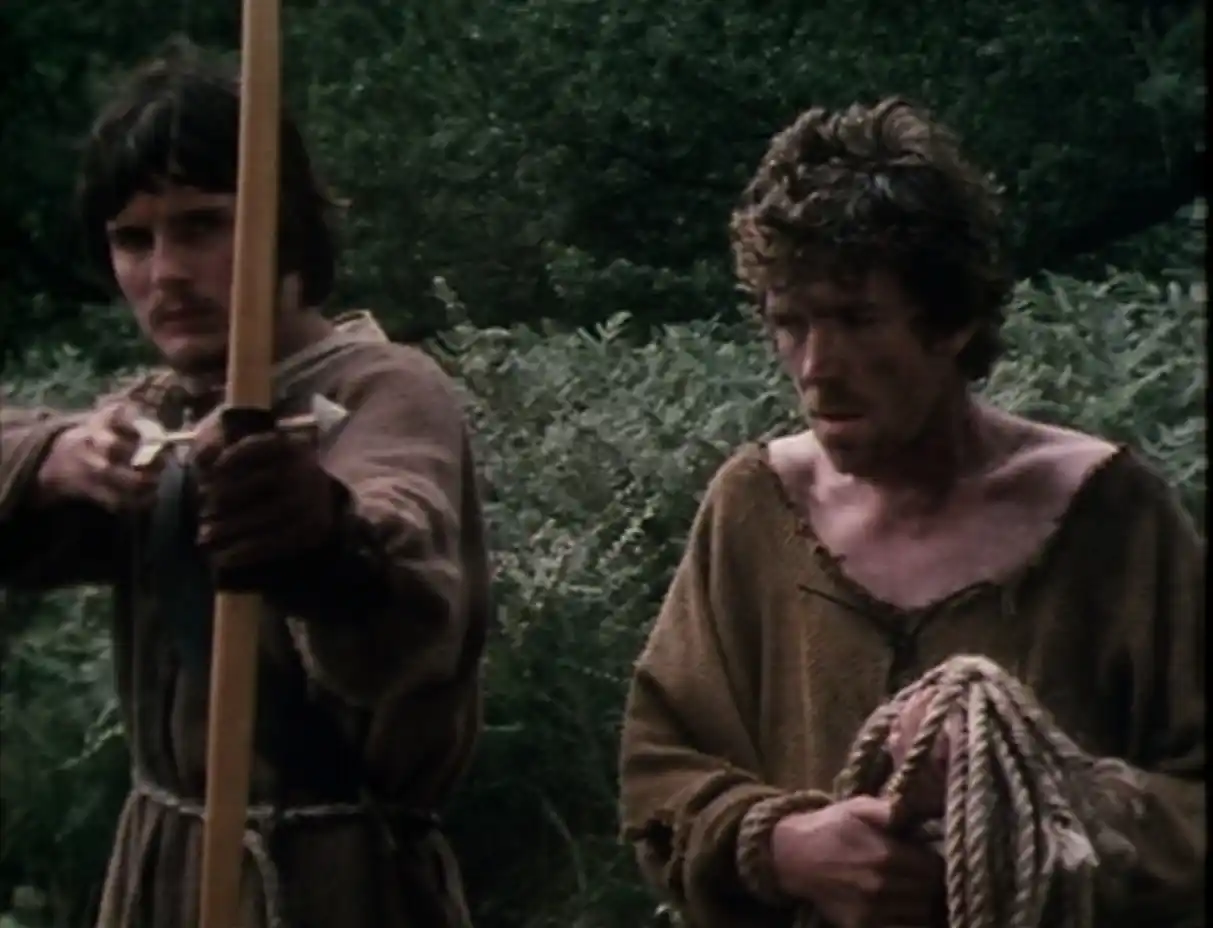
But Robin's heroic moment of freeing a prisoner (a moment viewers would come to expect from other film and TV versions) and killing the soldiers (as in the ballad Robin Hood's Progress to Nottingham) is thwarted. Robin's foster father stops his foster-son and tells him to lower his bow and return the prisoner to the Normans. Master Hood is worried that causing trouble with Normans will hurt Robin's chances of gaining an earldom. (It's only after this scene that Robin learns of his true parentage.)
Sir Guy's "very valuable berry bushes" becomes a grim joke for Robin. But as it turns out, these are Chekhov's Berry Bushes -- and they will have a role to play in the tale's end.
Will Scarlet show Robin his estates
Ralph Gammon shows the abbot the penalty for stealing
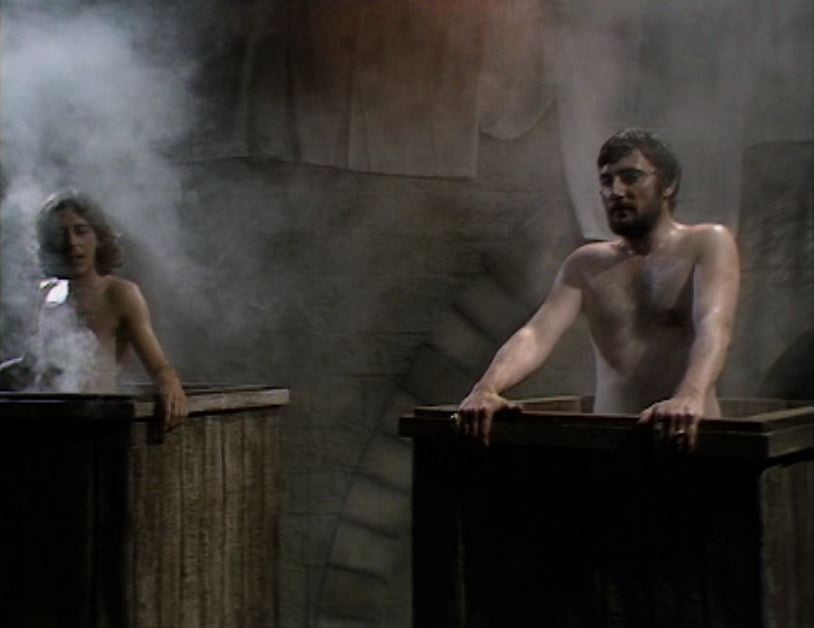
And what of the Merry Men? Well, they are not quite as merry as they are in some versions.
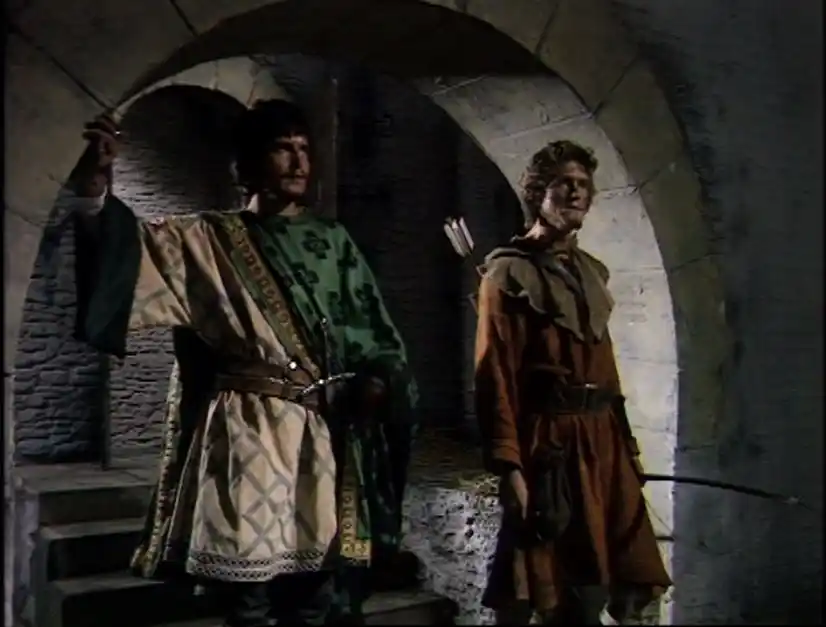
At the very end of the first episode, we get a brief glimpse of Will Scarlett (Miles Anderson) and Ralph Gammon (Stephen Whittaker) as they plan to ambush the traveller on the Huntingdon road. When the second episode starts, Robin manages to kill one of the three attackers. When Robin is knocked out, the one-handed Ralph plans to rob the rich traveller. But Will stops him. He recognizes the Huntingdon crest. Will's father was steward to Robin's birth father.
They find that the abbot who was holding the Huntingdon estates plundered the manor of all its goods before he left. Ralph and Will help Robin steal them back. And when Robin becomes an outlaw, they stick with him. They pick up another member when the young miller's son Much (Richard Speight) says his father was killed for overhearing the sheriff and abbot's plans.
The outlaws do not live like kings -- they are near-starvation at the beginning of the fourth episode. They go to Ralph's village for help, but find them even worse off. It's one of the show's many touches of realism. When the outlaws plunder the cellarer of St, Mary's Abbey, Will is reluctant to share in the bounty. "I speak only for myself, but I have no stomach to eat when I know that others are starving" Robin says that Will is their conscience and goes with him to distribute the food to the needy.
In the ballad, A Gest of Robyn Hode, it is Little John who is Robin's conscience. In the TV adaptation, Will takes on some of John's role in the ballad version.
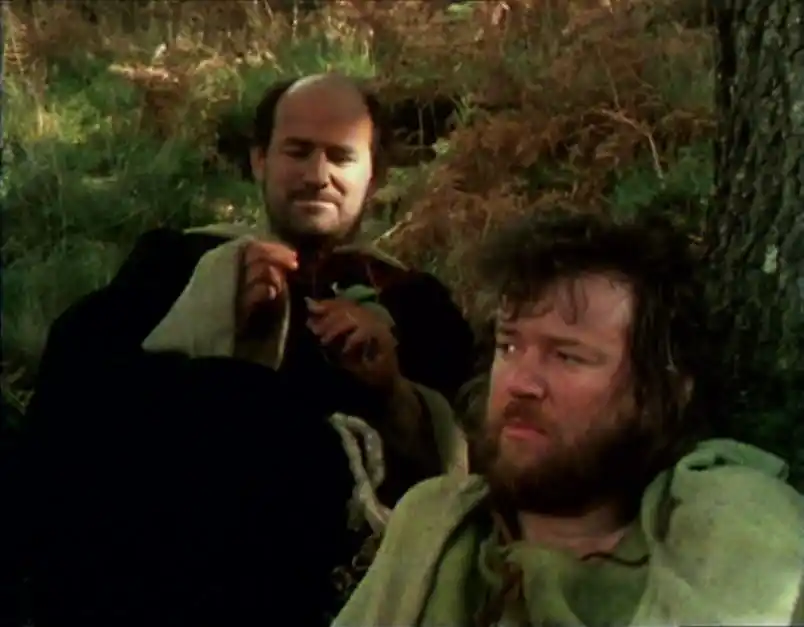
Little John (Conrad Asquith) begins as the leader of a rival gang of outlaws -- a gang that steals from Robin and his men. The famous quarterstaff duel happens when Robin confronts Little John to teach him a lesson. The pair become fast friends although at first Little John remains apart from the group - an ally in charge of his own group rather than a member of Robin's band. By the start of the fourth episode, Little John is firmly part of Robin's gang and his own followers appear to have vanished.
At the beginning of the fifth episode, Little John reflects on his past.
LITTLE JOHN: Do you ever wonder why we're here?
TUCK: We're watching the road.
LITTLE JOHN: No, I mean in the forest.
TUCK: Ha. You've turned philosopher.
LITTLE JOHN: A man thinks about his life.
TUCK: I'm here for the good of my soul.
LITTLE JOHN: So I've noticed.
TUCK: A healthy soul and a healthy body. These berries have an unusual tang. Make a good wine I'd wager. I must experiment. I've often dreamt of winning fame as the creator of a new elixir.
LITTLE JOHN: I was eight years in Nottingham Castle. I saw a few things in those dungeons. I said if that's the law, I'll be an outlaw.
Part Five written by Alexander Barron
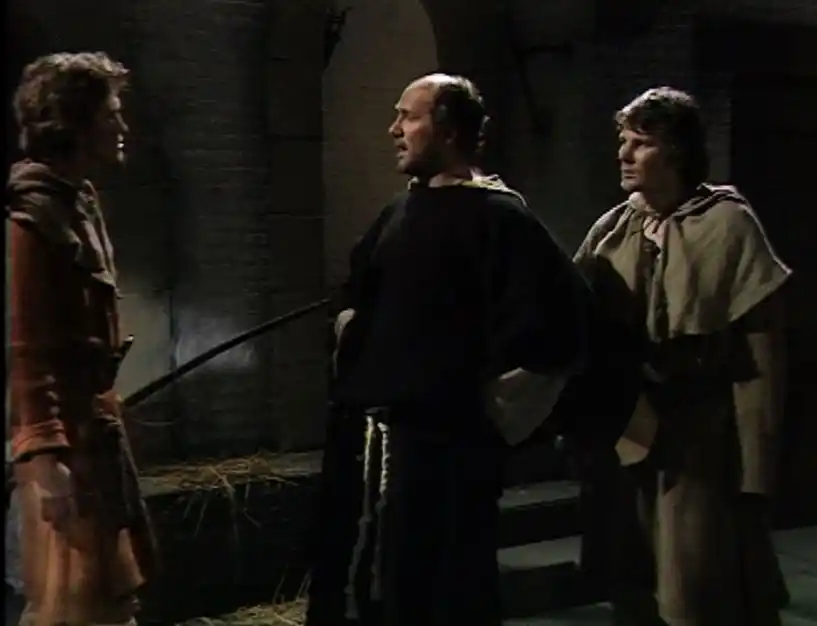
All the Merry Men are well-cast, but one stands above the rest. And that is Tony Caunter as Friar Tuck. He starts as the clerk and scrivener to the Abbot of Grantham (David Ryall), the custodian to Huntingdon manor. He's an unreliable clerk -- prone to getting drunk and wandering off into the woods. As he's packing to leave, the abbot remarks ""Well, this time, the hermit can wander forever" and leaves without him. The Friar returns to the manor to find it occupied by the new Earl of Huntingdon.
TUCK: Who are you?
WILL: Bow to your Lord and Master, the Earl of Huntingdon
TUCK: I only ever bow to Christ which annoys my so-called betters on Earth profoundly.
Part Two written by Robert Banks Stewart
This version of Robin Hood is generally not as witty as most, but Caunter's Tuck is somewhat of an exception. When they rob corrupt monks, Tuck remarks in part five "I love the church. Hate the clergy."
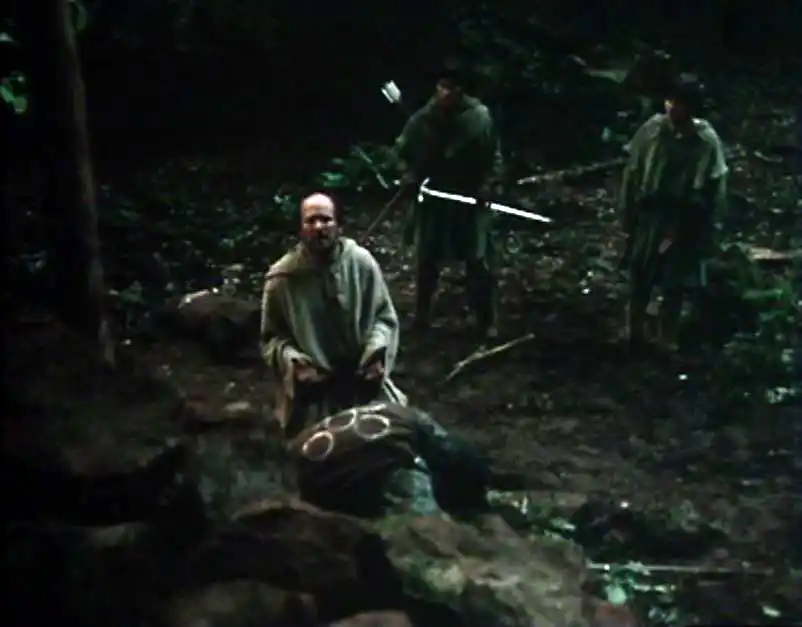
And yet, there is a darker and also more spiritual side to this Tuck. At the beginning of the fourth episode (written by David Butler), Tuck encounters a runaway serf. He begs the attacking soldiers - "For pity's sake!" "Leave him!" When the soldiers don't, Tuck strikes down the soldiers.
Robin and the others find the mournful Tuck regretting his actions.
TUCK: They cut him down in cold blood. I rose in wrath. Oh God, forgive thy servant for his anger. And these hands that are stained with blood. The earth beneath thy holy rood.
Part Four, written by David Butler
Later on in the episode, the outlaws encounter the cellarer from St. Mary's Abbey, a figure from the medieval ballad A Gest of Robyn Hode. As in the ballad, the cellarer lies about what is in his packs -- claiming that they are holy vestments that belong to the abbot. But this time, Robin has a religious man on his side, a rather angry one.
TUCK: By his vows, the abbot can own nothing.
CELLARER: You speak to me of vows, you impious villain?
TUCK: Impious? Impious? You doubt my odour of sanctity? The odour I have from you is of ale. Ale and wine! You abomination! Now, make confession or be whipped for falsehood.
Part Four written by David Butler
The episode really spotlights Tuck as more than just a figure of fun.
Robin tells Tuck he didn't expect to steal from the church. But Tuck assures him "If he had been a godly man, he would have passed unharmed."
Martin Potter's Robin Hood is not quite the joyous trickster of Errol Flynn or even Richard Greene. Fans of the 1991 film Robin Hood: Prince of Thieves will not be surprised to learn that once again, it is the Sheriff of Nottingham who imbues the show with life. And a lot that comes from the actor.
When Andrew Orton, the author of The Hooded Man (a look at the later TV series Robin of Sherwood) covers earlier Robin Hood productions, his remarks about the 1975 TV series focus mainly on Darrow as the Sheriff. "Paul Darrow makes an impressively Darrow-esque Sheriff as he Darrows his way through the script in his own Darrowing fashion."
If you're a fan of the 1978-1981 BBC science fiction TV series Blake's 7, then you'll likely know exactly what Orton means. The words "And Paul Darrow as the Sheriff of Nottingham" conjures up an expectation for Blake's 7 fans that is more than met by his performance.
Blake's 7 created by Terry Nation (the man responsible for the Doctor Who foes The Daleks) has sometimes been described as "Robin Hood in space". Blake (played by Gareth Thomas) is your classic Robin Hood type. When Blake is exiled on a prison ship, he starts a rebellion and one of his allies is a computer hacker named Kerr Avon (played by Paul Darrow), who was convicted of trying to defraud the banking system.
JENNA: At least you're still alive.
BLAKE: No! Not until free men can think and speak. Not until power is back with the honest man.
AVON Have you ever met an honest man?
JENNA [Glances at Blake] Perhaps.
AVON Listen to me. Wealth is the only reality. And the only way to obtain wealth is to take it away from somebody else. Wake up, Blake! You may not be tranquilized any longer, but you're still dreaming.
Blake's 7: "Space Fall", written by Terry Nation
Under the pen of Terry Nation and Chris Boucher, Darrow's Avon sends sarcastic jibes towards his leader. The performance can be entertainingly arch and as "over the top" as you can imagine.
The same is true with Darrow's performance in The Legend of Robin Hood. He delivers his lines to the very hilt. For example, when he threatens his ally the Abbot of Grantham ""You will be as silent as the grave, my dear abbot. It would be unfortunate for you if anything should go wrong." Each word in the threat becomes its own sentence.
The notable thing about Darrow in Blake's 7 is that when Gareth Thomas left to go back to the theatre, the cynical Avon became the star of the show for two seasons. By the final season, Avon began to drift into madness with odd thousand-yard stares.
Darrow's Sheriff has a similar look in the fourth episode upon finding out how the peasants look up to Robin Hood. His instruction "Let them find out how hard life can be unless they talk." is more sinister than Alan Rickman's calls to "Call off Christmas" in the 1991 film.
Or in the final episode, it is suggested that the loyalty of his men is gone, the Sheriff says " I do not need loyalty!" The stress on the word loyalty is a unique Darrow spin.
The Sheriff is defiant to the end. As when he confronts King Richard.
RICHARD: I’ll not waste words on you, my lord.Your crimes are many. The pity is you can only die once. But die you shall, I promise you.
SHERIFF: Am I to die with your brother?
RICHARD: I hope you will be as confident on the scaffold.
SHERIFF: The royal blood is not capable of treason?
RICHARD: Put him in chains and guard him well, until he’s hanged in the morning.
SHERIFF: My rank entitles me to the axe.
RICHARD: You shall have it, and your head on a spike on the castle gate
Part Six written by Alistair Bell and Robert Banks Stewart
In many ways, the Sheriff is the ultimate villain of the tale. He is the master manipulator -- a chess master if you will. (And certainly that's the image the production wants to leave with us as he's often pictured at a chess board.)
The sheriff brings up Prince John's treachery, but this is a treachery that he fostered.
PRINCE JOHN: Just what are you suggesting?
SHERIFF: As soon as Richard sets forth, it will be time for you to play the part of a king.
PRINCE JOHN: You're forgetting Longchamp.
SHERIFF: Appoint your own chancellor. Ostensibly for your own lands and create your own court.
PRINCE JOHN: A rival court? You have a persuasive line in treachery, Nottingham, but even in here, I sweat cold. If Richard knew I had as much as entertained the thought, he'd have my head.
SHERIFF: Wait until he's gone.
PRINCE JOHN: And when he returns?
SHERIFF: If he returns.
Part Two, Written by Robert Banks Stewart
Prince John is also played by a British sci-fi icon.-to-be. David Dixon would later star as Ford Prefect in 1981 BBC adaptation of The Hitchhiker's Guide to the Galaxy by Douglas Adams.
Prince John is a villain, but he has more scruples than the sheriff. For example, he is unwilling to have his brother Richard killed. (The sheriff and his other allies have no such scruples.) And although the Bishop of Durham opposed Prince John's grab for power, the prince still laments his death. (A death orchestrated, without the prince's knowledge, by the sheriff.)
Over all, he is depicted as an immature figure -- certainly that's how his brother Richard I and his mother Queen Eleanor (Yvonne Mitchell) view him. Prince John insists that his plans were of his own design, even when it would be more convenient for him to blame others.
PRINCE JOHN: Is Richard to be set free?
ELEANOR: Yes, and before he arrives you must undo the damage that you have done.
PRINCE JOHN: Damage? I had Longchamp committed to the Tower for treason. I was appointed regent by the council. They were unanimous.
ELEANOR: I thought you were beginning to learn something of life. You have let yourself be tricked by power-hungry men.
PRINCE JOHN: That’s not true.
ELEANOR: They used you to fashion their own ends.
PRINCE JOHN: The idea to dismiss Longchamp was mine. It grew in my brain, and I put it to the council.
ELEANOR: They let you think it was your resolution.
PRINCE JOHN: The ship was in danger. I took command. I brought it into safe waters.
ELEANOR: (approaches and grabs his hand to comfort): You will tell Richard that you were led astray.
PRINCE JOHN: I will not.
ELEANOR: Then there is only one end. The axe.
PRINCE JOHN: I see. I am not to be responsible for my actions. And I am to be guilty of foolish behaviour, is that it?
RICHARD (off stage): Yes, John, it is.
Richard is at the door, and comes in.
RICHARD: But don’t take it to heart. I forgive you. Your friends were just too much for you. They will pay for their treason.
Part Six written by Alistair Bell and Robert Banks Stewart
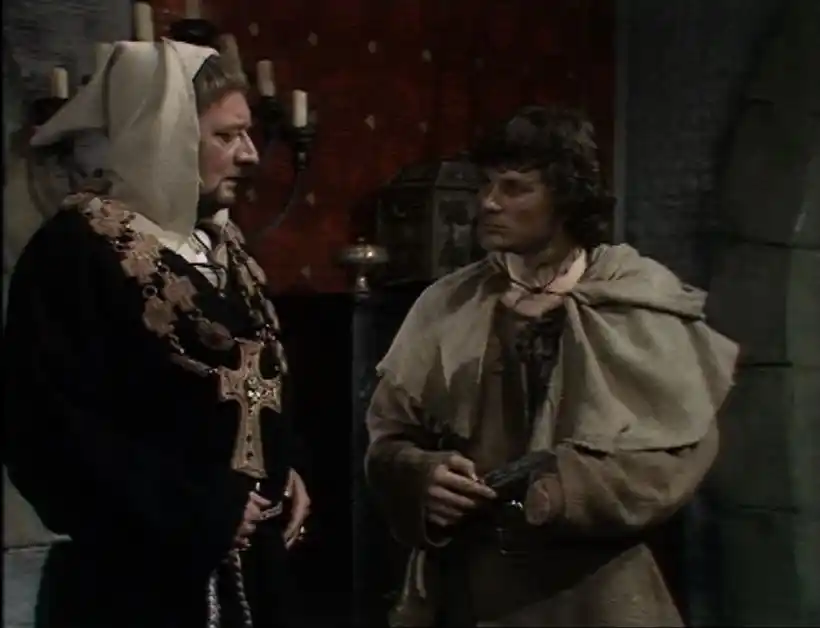
As in the ballads, there are many clerical foes -- including the foolish Abbot of Grantham (David Ryall) who is disposed of when he becomes a liability. And in the fourth episode we meet the ballad character of the Abbot of St, Mary's played by Kevin Stoney -- a much smarter and more self-assured abbot. This one is interested in helping Prince John's plans, but does not want his name to be included on any formal list of supporters. When it becomes clear that the Sheriff does not have the situation under control, he withdraws even his secret and unofficial support.
The villainous abbots and their allies are balanced by positive figures such as Friar Tuck and Malcolm Rogers as the Bishop of Durham, and to an extent Geoffrey Russell as Longchamp, although the show focuses more on Longchamp's political roles than his title as Bishop of Ely.
There is one other notable clerical foe from the Robin Hood legend, but I’d like to talk about her brother first.
William Marlowe’s Sir Guy of Gisborne gets top billing among the enemies. It makes sense. Darrow’s sheriff might be the spider at the centre of the web of schemes, but Sir Guy’s villainy strikes closer to home — Robin’s home to be precise. When Robin is outlawed, King Richard gives the Huntingdon estates to Gisborne. He also consents for Sir Guy marry Lady Marion.
There have been a lot of different portrayals of Gisborne over the centuries from the violent bounty hunter of the ballads to the sauve and sinister landowner played by Basil Rathbone to the mere lackey of the Sheriff and to the complex and compelling Gisborne played by Richard Armitage in the 2006 TV series.
Marlowe’s Gisborne is no mere lackey. He has titles and estates, and wields enormous power. But he’s not quite the evil but courtly Gisbourne of the 1938 film. He certainly attempts to charm Marion (and more successfuly charms her uncle), but there’s an element of vicious thuggery to this Gisborne. When we first hear about him it’s that he’s killed men for picking berries off his bushes.
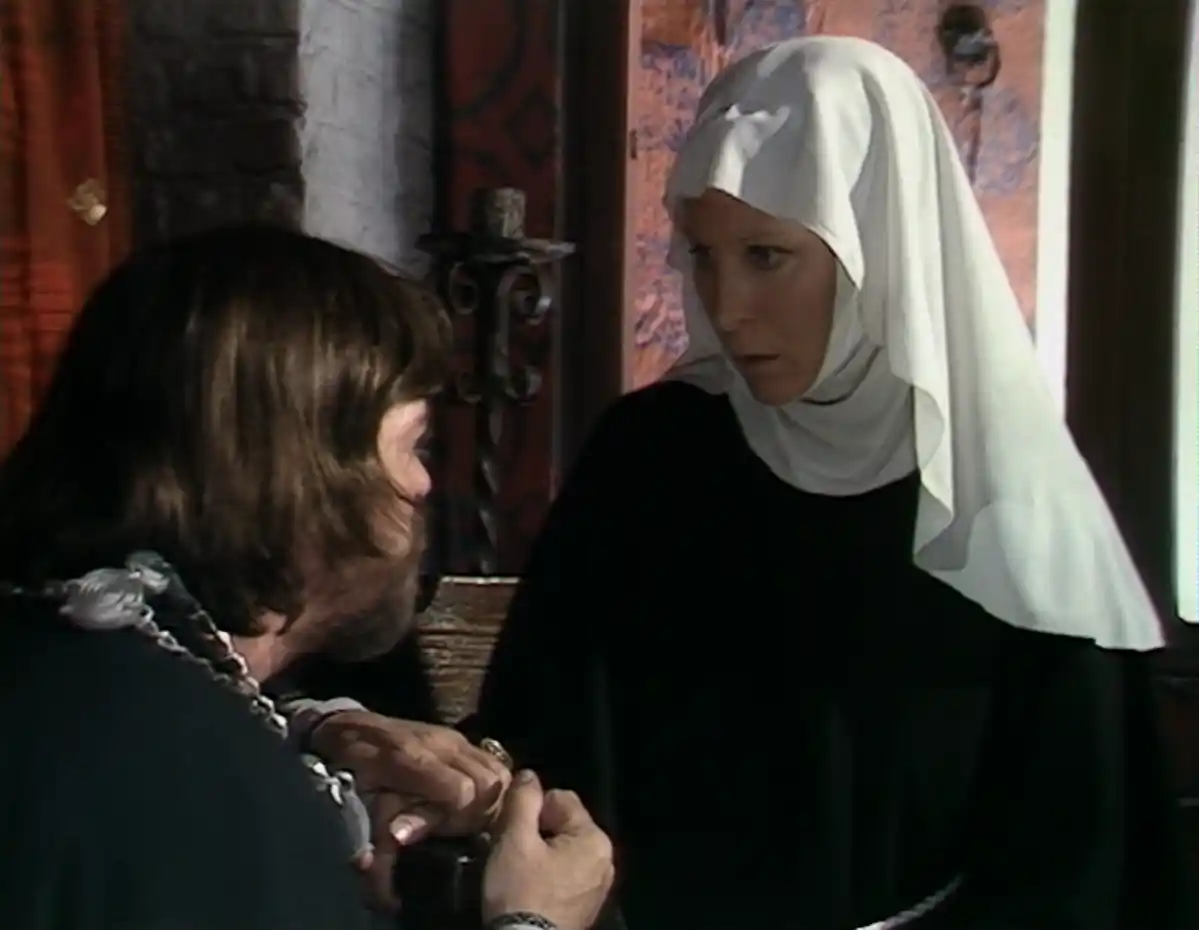
And yet, Gisborne persists in trying to woo Marion — in his own forceful way. He claims that she has bewitched him. That line brings to mind Sir Brian de Bois-Guilbert’s pursuit of Rebecca in Ivanhoe. Gisborne appeals to his sister for help as she has had experience in guiding her sex. Gisborne’s sister Margueritte (Patricia Franklin) is a prioress.
PRIORESS: It is your thoughts that are in need of guidance, Guy. Our blood is Norman. This woman is a Saxon.
GISBORNE: I love her and I want her for my wife.
PRIORESS: Because of her, you refuse to go to the Holy Land and fight for the cross?
GISBORNE: No use scolding me, my dear sister. I beg of you to do as I ask. If I have brought disgrace to our name in the past, I give you my word of honour, my deeds in the future will bring glory to it.
PRIORESS: The woman hates you. How do you imagine I can turn this to love?
GISBORNE: You’ll find a way. If only for the love that you bear me.
PRIORESS: What you refuse to do and what you are planning to do sorely tries my love.
GISBORNE: But does not diminish it. (Kisses her hand)
Part Six written by Alistair Bell and Robert Banks Stewart
If the mention of a prioress causes alarm bells to ring, perhaps it means you are familiar with the Robin Hood legend and what the Prioress of Kirklees is noted for. Traditionally, the prioress is related to Robin Hood. And that’s the case in Pierce Egan the Younger’s novel too. But Egan says that her lover was Sir Guy of Gisborne’s brother. In Alexandre Dumas’s translation of Egan — the relationship is somewhat simplified and it is the prioress herself that is related to Gisborne. This is another sign that Egan through Dumas was a likely influence on the show
Oh, and Robin Hood has another enemy … one from the 20th century
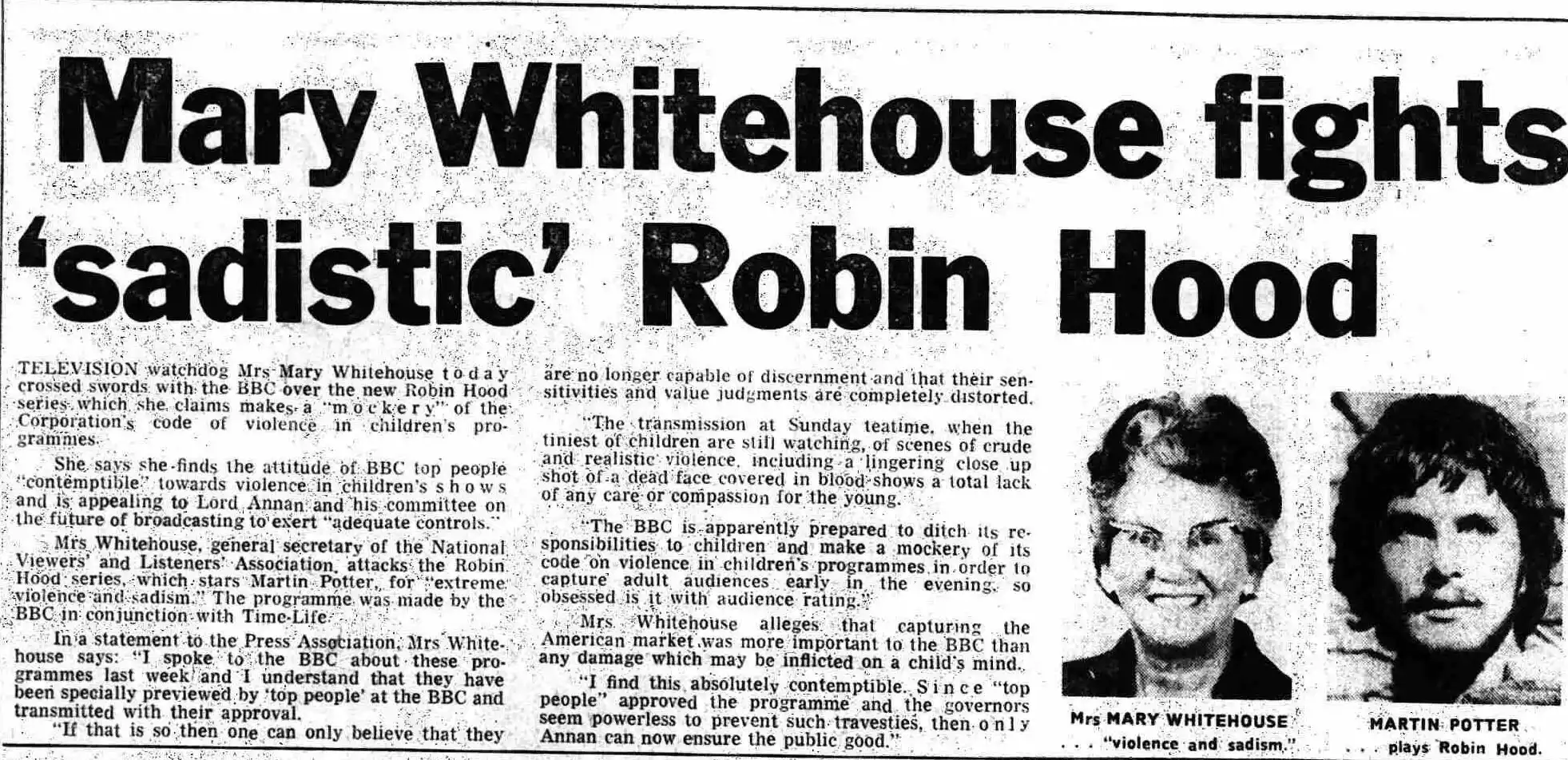
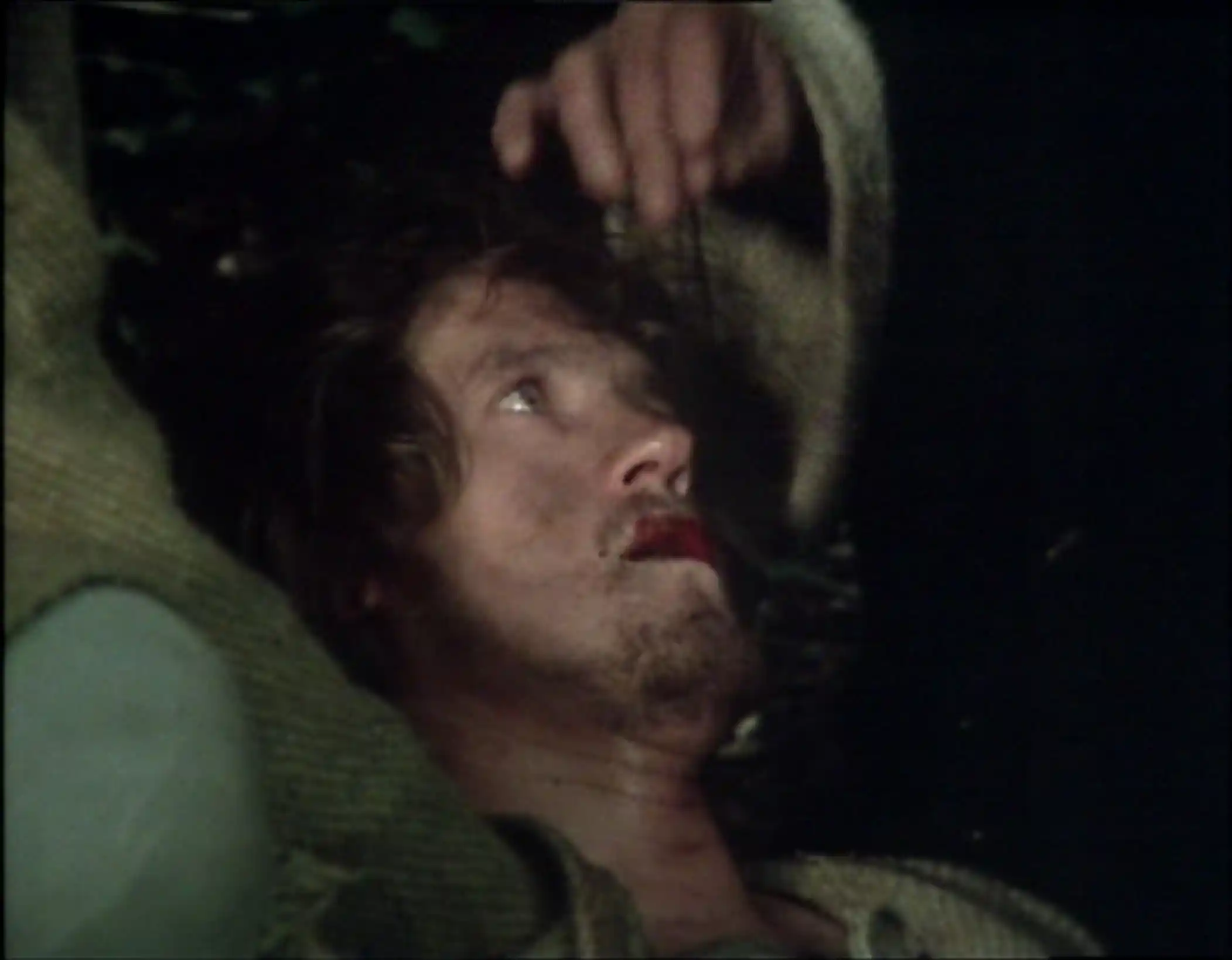
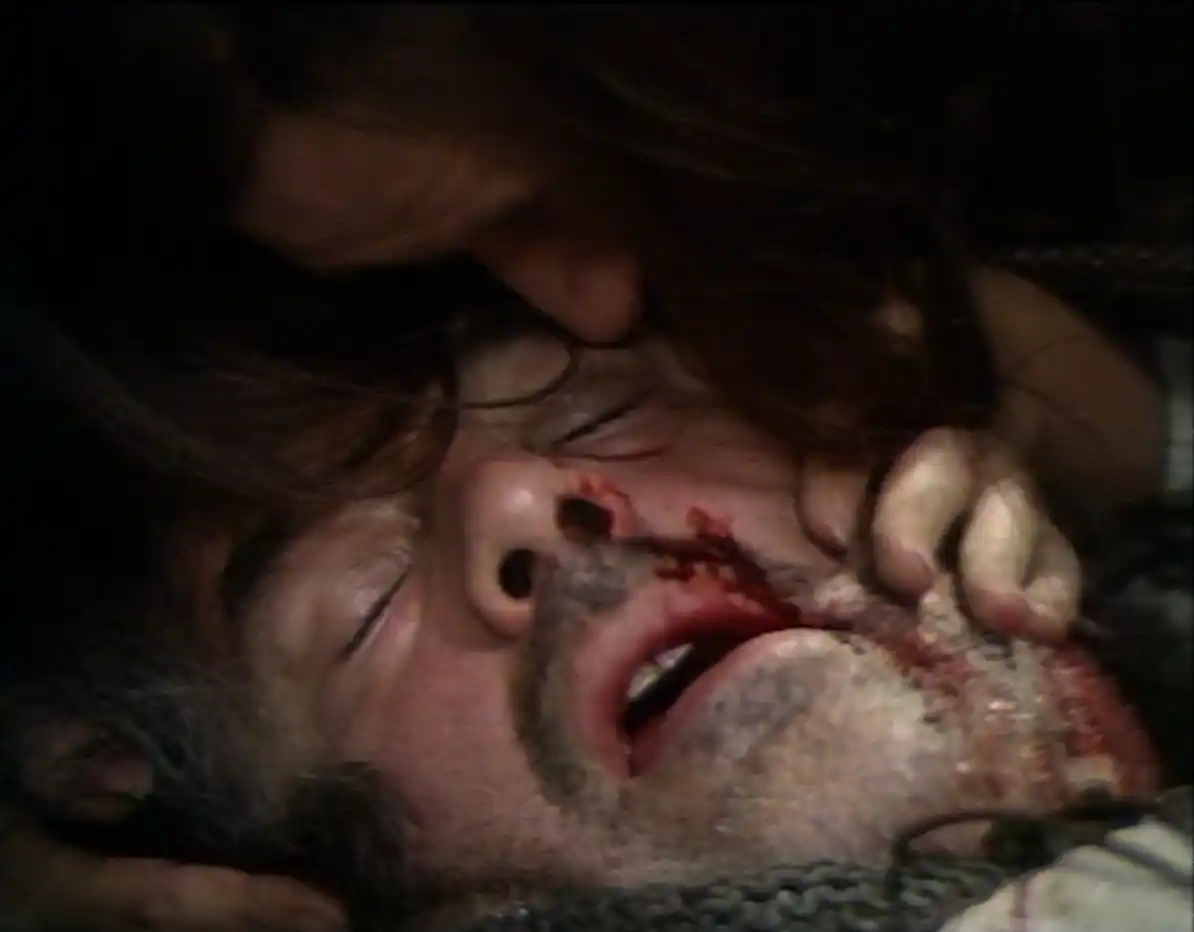
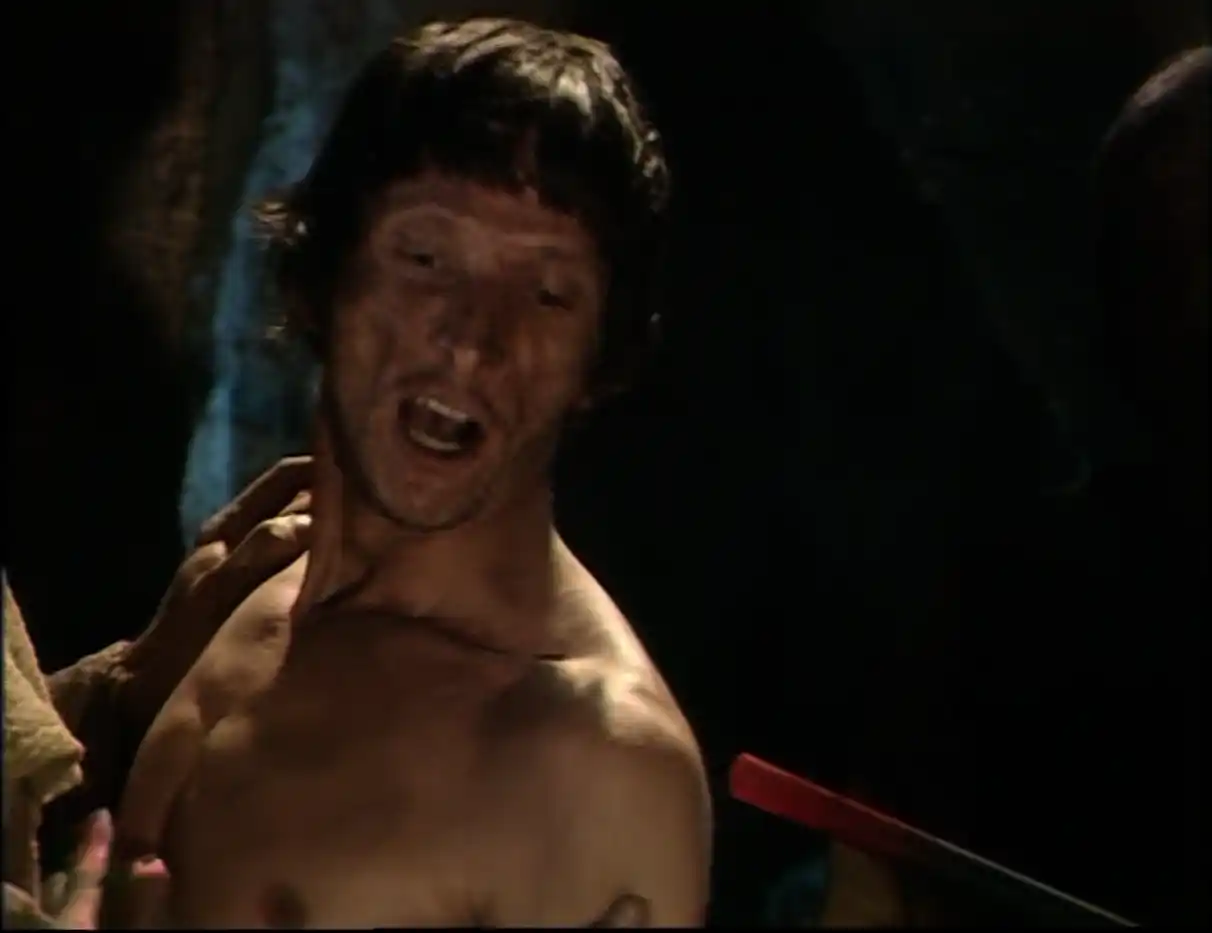
On Dec. 22, 1975 many British newspapers reported that “Television Watchdog” Mary Whitehouse was furious with the BBC for their Robin Hood TV series. She blamed the BBC’s need to cater to an American market for the realistic violence and a gruesome scene that lingered too long on the blood-covered face of a dying man.
Mary Whitehouse was well-known for complaining about the violence in Doctor Who. And in the 1980s she labelled Robin of Sherwood to be “Satanic” (in part for an episode that depicted devil-worshippers as the bad guys). The impression of her from North American Doctor Who fans was this was someone out to ruin other people's fun.
Part 4: The Death of Will Scarlett
Part 5: The Death of Sir Kenneth Neston
And yet, it is somewhat damning that at first glance, I’m not sure which episode she was actually talking about. The reports were published the day after episode five aired, and yet she apparently spoke to the BBC “last week”.
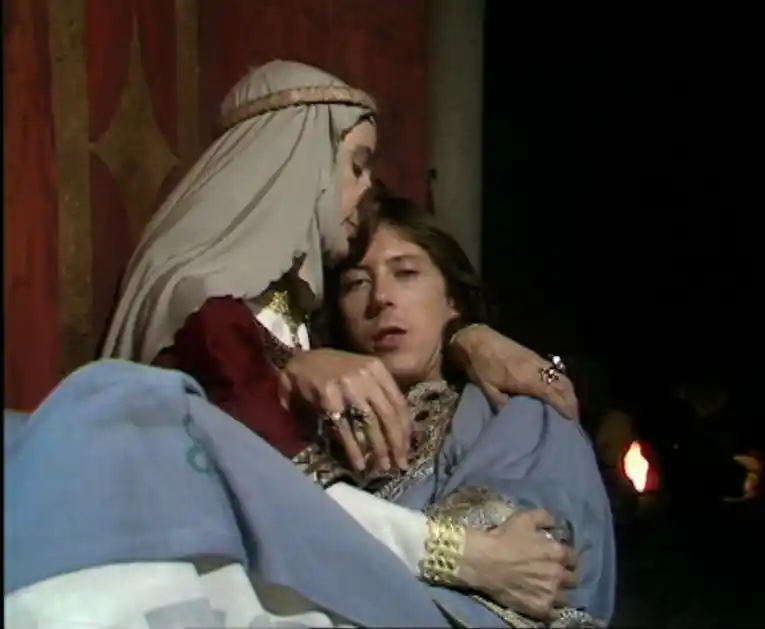
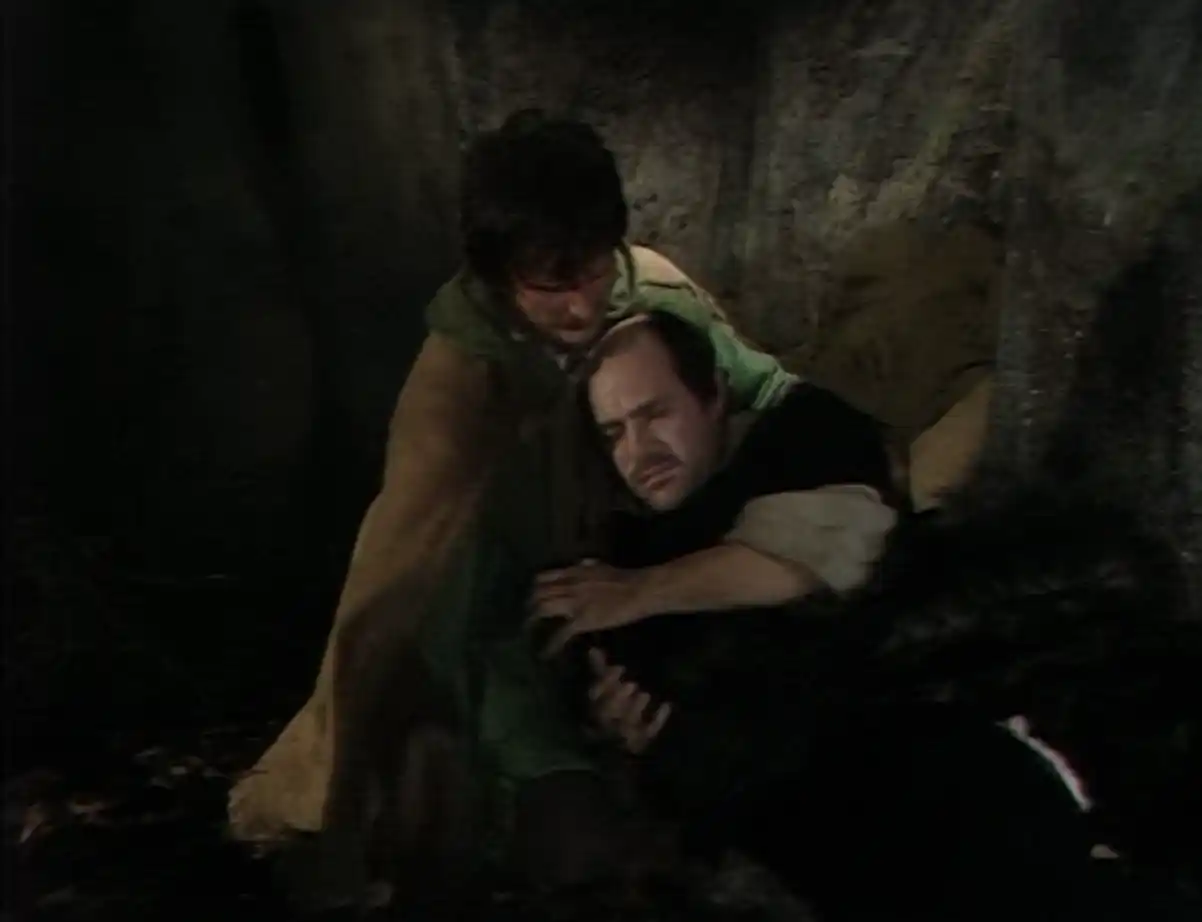
Will Scarlet is killed in the fourth episode, and we linger on his face before Tuck closes his eyes. In the same episode, Robin stabs the sheriff’s chief lackey Alaric (Frank Vincent) through the neck. In episode five, Sir Guy slices his sword through Sir Kenneth Neston and then stabs him in the neck. We see Neston’s face as Marion cradles her dead uncle’s body.
A report in the Guardian in 1976 also took issue with the offending close-up as going too far, even as it dismissed many of her charges. The Guaridan article clarified that this was a family show, not a children’s show. The Legend of Robin Hood had eight million viewers, and about five million of them were adults.
And yet, Mrs. Whitehouse hadn’t seen anything yet.
The death of Ralph and Much
Robin comforts an ill Friar Tuck
When Robin and Little John return to their abandoned headquarters to find Tuck there, the friar is sick with fever. He tells Robin not to come any closer, but Robin does anyway.
Tuck believes he may have found a cure for the plague that ails him -- the berries that grow by the wild madden. (One wonders if these were from the "very valuable berry bushes" belonging to Sir Guy.) Robin and Little John promise to collect the berries, but while they are sleeping Tuck wanders into the forest and dies.
But despite the death, the show seems to promise a happy ending.
The villain confesses
The Sheriff is captured
The true murderer of the Bishop of Durham is exposed when he pays for his ale with a cross stolen from the bishop. Robin threatens the brigand with a branding iron to expose the sheriff's plans to the king and clear Robin's name.
Robin tells the king of an escape route out of Nottingham Castle, and they capture the Sheriff of Nottingham.
All seems to be set right. The rightful king is back. The bad guys are captured. Robin's earldom is restored. And he is to marry Lady Marion.
But at the moment of triumph, Robin begins to feel the effects of Tuck's fever. He leaves his friends and journeys to Huntingdon Manor where he meets a young man. Robin sends him to collect the berries.
But when Robin awakes, he finds himself treated by the prioress. She takes the berries from the boy to prepare a potion.
ROBIN: Thank you. Ah, it is bitter.
PRIORESS: Yes. But drink it all. (Drowns the cup.) My lord.
ROBIN: The boy told you who I am.
PRIORESS: Oh, no, my lord. I know you for another reason. Sir Guy of Gisborne was my brother. Yes, my lord, it contained poison. (Drops cup) There is no antidote. Soon, you will begin to feel cold. In four or five hours, you will be dead. Goodbye, my lord.
Part Six written by Alistair Bell and Robert Banks Stewart
Like Robin and Marian the following year, Robin is poisoned rather than bled to death as he is in the ballads A Gest of Robyn Hode and Robin Hood's Death. And yet both these mid-70s Robin Hood productions do a fair job at adapting the ballad to suit their narratives.
Since filming of Robin and Marian was well underway before the filming of this TV series, it is possible that the writers knew what was coming in the movie and decided to beat them to the punch.
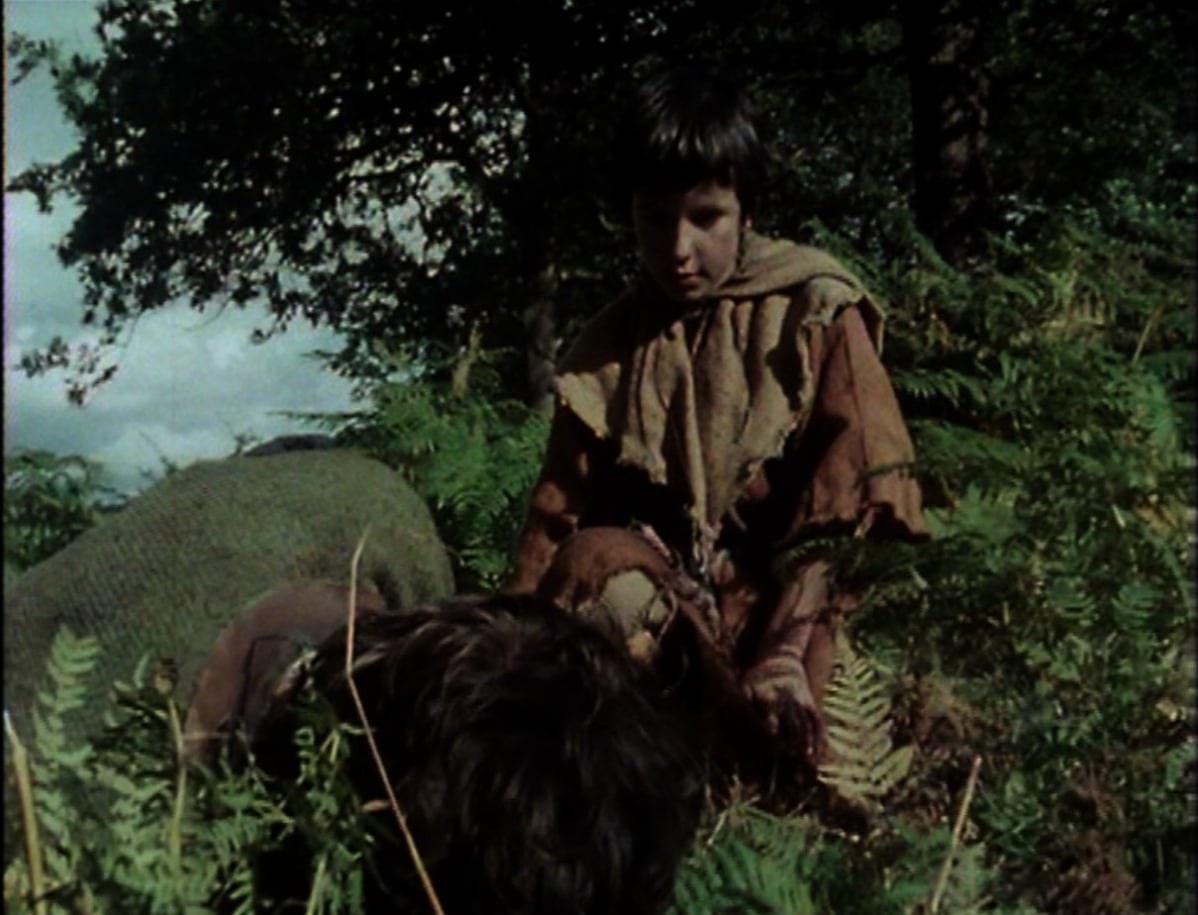
But Robin is not quite dead. Like Tuck, he wanders off into the woods where he meets a young boy who pesters him with questions.
YOUNG BOY: Are the soldiers chasing you?
ROBIN: No, not this time.
YOUNG BOY: Are you sick?
ROBIN: Yes. Don’t come too near.
YOUNG BOY: Are you an outlaw?
ROBIN: No, not now. I once was.
YOUNG BOY: who are you?
ROBIN: My name is Robin Hood.
YOUNG BOY: Robin Hood?
ROBIN: Would you do something, would you?
YOUNG BOY: Yes.
ROBIN: Would you run to the village, and wait for a very big man and a pretty lady? They should be coming soon.
YOUNG BOY: What should I tell them?
ROBIN: Tell them… just tell them.
YOUNG BOY: About you, sir?
ROBIN: Yes.
YOUNG BOY: You wait here. Don’t go away, will you?
ROBIN: No, I shan’t go away.
YOUNG BOY: I will tell them. (Runs and then turns back) i’ll tell them about Robin Hood.
Part Six written by Alistair Bell and Robert Banks Stewart
It's not a part of the original ballads, but this last conversation is a strange, haunting moment. It reminds me somewhat of the dying King Arthur's scenes with the young Tom (the future Thomas Malory - author of Le Mort D'Arthur) in T.H. White's The Once and Future King and the musical adaptation Camelot.
It also provides bond between the darker elements of the medieval legend with the younger child viewers. A young audience-identification figure who gets a chance to question the dying outlaw.
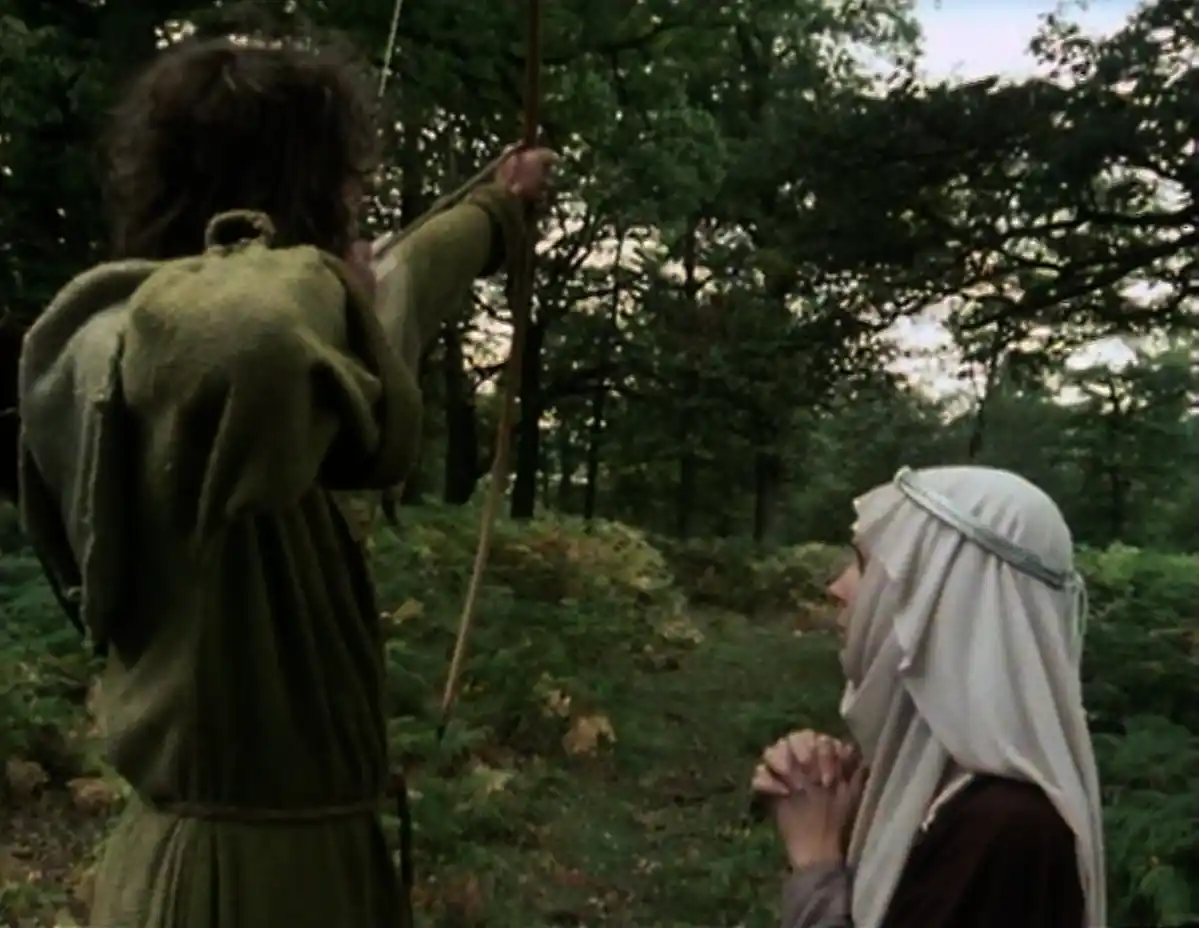
We then see Marion and Little John by the road. Little John aims his bow and declares "Where this arrow falls, there he’ll lie." Very much in keeping with Robin Hood's final arrow in the ballad Robin Hood's Death (and the 1976 film Robin and Marian.)
You might have noticed a certain formality in the dialogue I've quoted here.
Errol Flynn's Robin had the quick-witted banter of a 1930s gangster film. But Martin Potter is a lot more formal. When it's revealed that Prince John's slaves had mined thirty bars of silver, Robin says "30 pieces of silver? That is appropriate." A grim jest like so many jests in this TV series are.
I find myself at times wishing for the quotable wit of I, Claudius -- to mention another low-budget British TV series of the same time.
It is a fault of many of these grim takes on Robin Hood to think that stripping away most of the humour will make something more adult, more mature. And yet a dose of humour -- such as in Robin of Sherwood -- would not lessen the darkness. Shadows need light to be seen. Or at least a touch more Brechtian humour would be welcome.
And yet, the show has many strengths. The situations are clever and the acting is exemplary. If one can get past the low budget and the deliberate slowness, there is much to enjoy here.
Contact Us